A new educational initiative brings the sea to classrooms in the Basque Country
After an initial phase of work and consolidation of the initiative in the Basque Country, six organizations in the region have come together to launch the Basque Country Blue Schools Network, an educational initiative that promotes the integration of knowledge about the sea and aquatic ecosystems in schools, with the aim of strengthening environmental awareness and students’ connection with their environment
The proposal is based on educational projects linked to the reality of the region and supported by specialized entities, and will allow schools to apply for European certification
Aquatic ecosystems in general, and the sea in particular, have a limited presence in educational materials and processes, even in coastal regions such as the Basque Country. To address this shortcoming and strengthen the bond between students and their environment, an educational initiative has been launched to promote the incorporation of the marine and river environment into the school curriculum in a cross-curricular, practical way that is connected to the local reality.
The initiative is jointly promoted by Itsasmuseum Bilbao, San Sebastián Aquarium, Plentziako Itsas Estazioa (PiE-UPV/EHU), the Ecoactive Museum Ship MATER, Surfrider Spain, and AZTI, which acts as coordinator within the framework of the European GES4SEAS project. All these organizations work collaboratively as facilitators, supporting educational centers in the design and development of their projects.
“We only protect what we know. Bringing the sea into the classroom is an effective way to foster a more aware, critical, and committed citizenry when it comes to caring for aquatic ecosystems,” says María C. Uyarra, an expert in sea and coast management at AZTI and coordinator of this network.
The Basque Country Blue Schools Network
The Euskadiko Eskola Urdinen Sarea – Basque Country Blue Schools Network is the initiative that coordinates and promotes the development of Blue Schools in the Basque Country. This network is part of the state structure, which in turn is integrated into the European Blue Schools Network, under whose common framework the entire program is organized.
Its objective is to promote the incorporation of content on the ocean and aquatic ecosystems into the school curriculum, as well as to encourage educational centers to commit to their conservation, adapting this model to the reality of the territory and strengthening the connection between education, the environment, and sustainability.
The organizations belonging to the network support schools in the development of educational projects that bring the sea into the classroom in a practical and cross-curricular way. This work allows schools to apply for European Blue School certification, which recognizes educational work in ocean literacy and sustainability.
The network is being built progressively as the educational centers themselves develop projects and obtain certification, while the promoting entities act as facilitators and companions, contributing knowledge, resources, and connection with the environment.
“We want the sea to be present in the classroom, which is why we want to encourage schools to join this initiative, to develop cross-disciplinary projects on the marine environment that encompass all disciplines (from music to science), and to become certified as Blue Schools,” says the coordinator of the initiative in the Basque Country.
Learning about the sea through experience
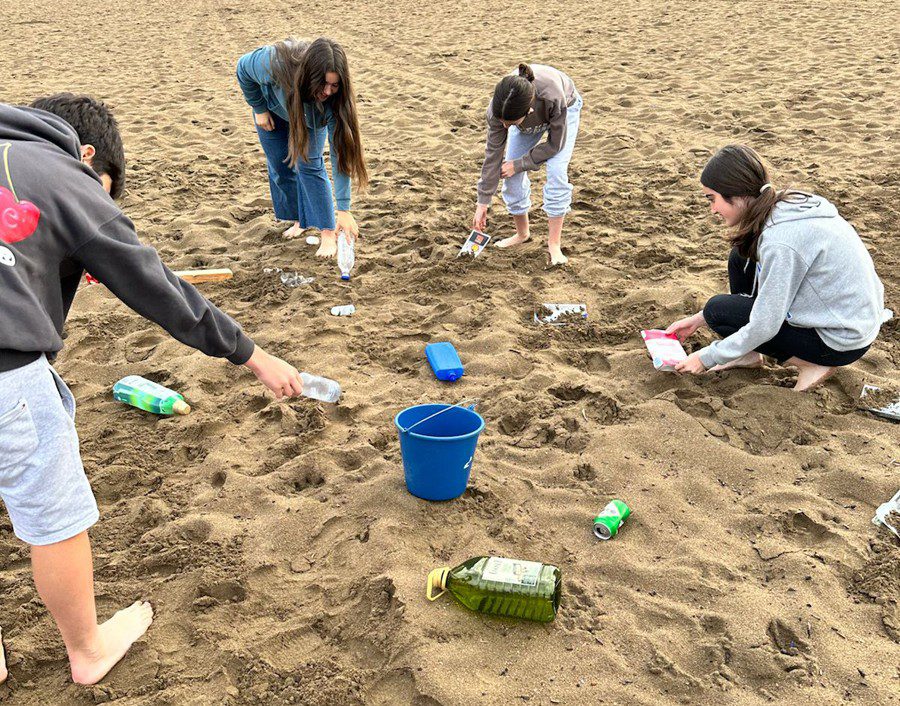
The initiative is based on educational projects that actively involve students, are developed in collaboration with specialized agents, and culminate in tangible results that are shared with society, such as exhibitions, informational materials, or open activities.
Participation is open to educational centers of all levels, from preschool to high school and vocational training, both coastal and inland. To join, centers can find all the information they need on the project website.
Currently, six centers in the Basque Country have already developed projects with this approach and have obtained European Blue School certification, and the number is expected to continue growing in the coming academic years.