Collaborative strategies to secure the future of the dairy cattle sector in the Basque Country
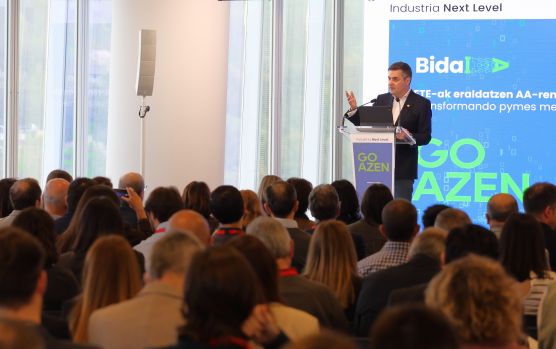
NEIKER organised two workshops in Arkaute to explore the transfer of solutions based on co-design with the sector and the improvement of food self-sufficiency
These events form part of the European TEDY initiative, which aims to transform dairy production towards more sustainable and resilient models using agroecological principles
This strategy is aligned with the Basque Government’s process of drawing up the Dairy Cattle Sector Plan
The dairy cattle sector in the Basque Country is facing a structural transformation that will shape its future. Over the last decade, the number of dairy farms has fallen by 39%, a decline that has hit smaller farms particularly hard and highlights the difficulty in ensuring the next generation takes over. Despite this loss of assets, total milk production has fallen by only 8%, compared with a 22% decline in the cow population. This gap confirms that, although the sector is now more professionalised and efficient thanks to modernisation, there is growing pressure on the profitability and sustainability of livestock farming.
Given this scenario, the NEIKER technology centre, an organisation under the Basque Government’s Department of Food, Rural Development, Agriculture and Fisheries, has organised two knowledge-transfer workshops over the past few weeks at its Arkaute headquarters as part of the European TEDY project (Together for Agroecological Transition in European Dairy Farming), an initiative that aims to transform dairy production towards more sustainable and resilient models through agroecological principles.
The meetings, aimed at livestock professionals, technical staff in the sector and representatives of the value chain, sought to identify practices that balance production efficiency with environmental and social sustainability, providing tools to strengthen the viability of Basque livestock farms.
“These forums are designed to facilitate the exchange of knowledge and experiences between the scientific community and all stakeholders involved in the dairy sector’s value chain, and especially with those who manage the farms on a day-to-day basis, so that technological solutions respond to the real needs of the field,” explained Roberto Ruiz, a researcher in the Department of Animal Science and currently Director of Territorial Impact at NEIKER.
Collaborative methodologies
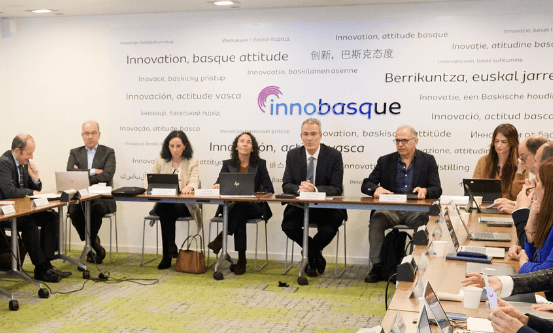
As part of this collaborative approach, the first workshop was held last week, in partnership with the Centre for Agricultural Research and Technology (CITA) of Aragon, to focus on the Living Lab methodology. This meeting brought together around twenty stakeholders from the sector to present the project, discuss and assess the main challenges, and evaluate the viability of agroecological practices for Basque livestock farms.
During the session, specific measures were analysed, such as the use of natural additives to reduce enteric methane emissions, technological devices for monitoring livestock, and the implementation of new indicators to measure the feed efficiency of each herd.
“This approach allows solutions to be developed in a participatory manner involving all stakeholders in the value chain and even seeks to influence the design of public policies, integrating technical knowledge with the sector’s direct experience,” notes the researcher.
This search for practical solutions continued this morning during a second day of the event, which focused on food self-sufficiency through the production of high-quality forage. The session addressed how to transform one’s own pasture into a ‘premium feed’ to improve profit margins in the face of rising costs for inputs such as fertilisers and cereals.
Specifically, the session presented techniques for determining the optimal cutting time based on the type of grass or forage crop and for minimising losses in nutritional value, which can reach 20–30% due to poor silage or haymaking.
In this regard, Ruiz concludes that “there is a direct relationship between the quality of on-farm forage and the need for supplementation with concentrated feed, and therefore production costs, but also with enteric methane emissions. Producing high-quality on-farm forage is the most effective way to ensure profitability and strengthen the sector’s competitiveness in the face of current challenges”.
Line up with the Basque Country’s sectoral strategy
The knowledge generated during these sessions and throughout the TEDY project is in line with the strategy to support the sector promoted by the Basque Government, which takes the form of the Dairy Cattle Sector Plan, a strategic document currently in its final drafting stage following a year of collaboration between the administration and industry stakeholders.
This plan aims to consolidate the Basque Country’s professional production model through the integration of applied innovation.