DISRUPTIVE commits in its 5th Assembly to digital convergence as a way to strengthen European technological sovereignty
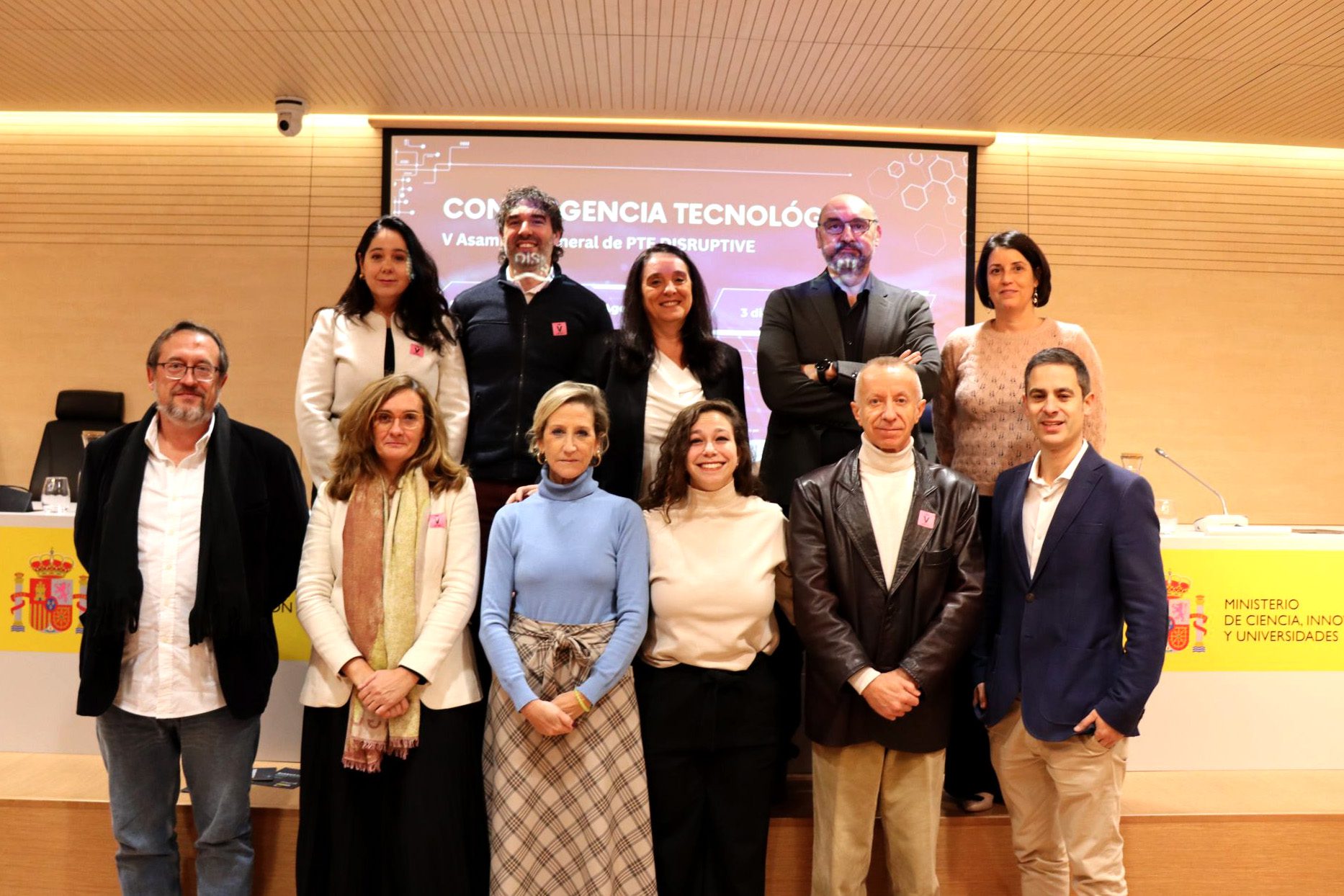
The Spanish Technology Platform for Disruptive Technologies (DISRUPTIVE) held its 5th General Assembly in the auditorium of the State Research Agency (AEI) in Madrid, bringing together representatives from academia, business and public administration to analyse how the convergence between key digital technologies is redefining competitiveness, technological sovereignty and the future of innovation in Spain and Europe.
The event, which could be followed both in person and via streaming, focused on the idea that 5G, artificial intelligence, cybersecurity, blockchain, quantum computing and digital accessibility can no longer be understood as isolated fields, but as interconnected pieces of the same ecosystem.
The session was opened by María Ángeles Ferre, Head of the Subdivision of Thematic Scientific-Technical Programmes of the AEI, who highlighted the strategic value of the Network of Technology Platforms, made up of 52 platforms, and underlined the role of DISRUPTIVE as a structuring agent for business digitalisation. Ferre also presented the new public-private collaboration calls launched by the AEI.
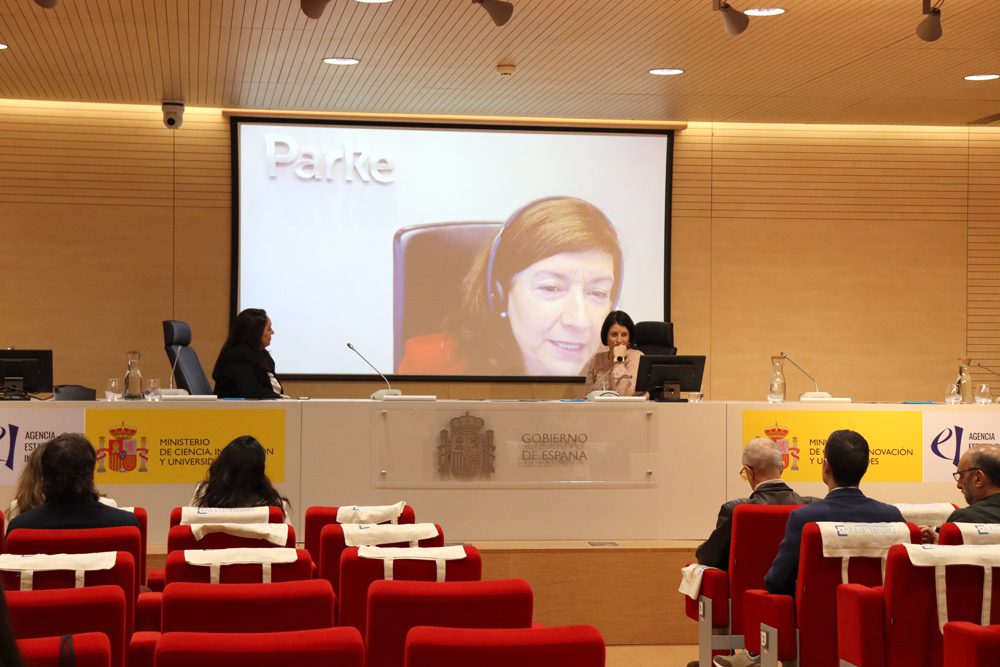
DISRUPTIVE’s president and general director of the Basque Country Technology Park , Itziar Epalza, spoke remotely to highlight the growth of the platform, which already includes almost 900 professionals from more than 700 entities and has organised over 80 activities since its creation. She stressed that DISRUPTIVE has consolidated itself as a key space for connecting talent, knowledge and strategic projects.
Ana Acebrón, Director of Support for Entrepreneurship, Innovation and Transfer at the UC3M Science Park and member of the APTE Executive Committee, noted that technological convergence perfectly describes the current moment and should be directed towards three priority objectives: competitiveness, talent and high-quality public services.
The keynote speech was delivered by Belén Suárez López, CEO of Go To Innovation. In her presentation, she stressed that innovation must be managed from a systemic and standardised approach, integrating horizontal technologies with vertical sectors. She also highlighted that Europe continues to face challenges in transforming research into applied innovation.
Elena García, APTE’s coordinator of projects and networks, presented the annual activity report:
- 894 members from 703 entities
- 36 activities organised in 2025
- 58 B2B meetings, with 22 collaborations underway
- More than 17,000 visits to the DISRUPTIVE website and strong growth of the YouTube channel
One of the highlights of the day was the presentation of the Quantum Computing White Paper, delivered by Pilar Troncoso (CRO of QCentroid and coordinator of the DISRUPTIVE Quantum Computing Working Group) and Ulises Arranz (global advisor on quantum computing at EY and advisor to the Ministry for Digital Transformation).
The document analyses the state of the Spanish quantum ecosystem, its synergies with AI, cybersecurity, blockchain and 6G, emerging use cases, and recommendations to position Spain as a European reference. Arranz reminded the audience that quantum advances are happening in computing, communications, security and sensing, and that its adoption “will not be a sprint, but a marathon that we must start now.”
The agenda continued with a roundtable on the connections between 5G, cybersecurity, AI, blockchain and quantum computing, moderated by Elena García, with the participation of leading experts: Marco Fiore (IMDEA Networks and Net-AI), Óscar Lage Serrano (TECNALIA), Fernando L. Pelayo (I3A – UCLM), Paco Benítez (FIDESOL) and María del Sagrario Navarro Lérida (UCLM and INATBA). The speakers agreed that disruptive technologies only generate impact when they operate as an interconnected ecosystem. They discussed the challenges of European hyper-regulation, digital trust, rising risks in 5G+AI environments, and the key role of quantum in secure communications, advanced sensors and future European data spaces.
The event concluded with Ana Acebrón, who emphasised the role of science and technology parks as natural spaces for co-creation among companies, universities, technology centres and administrations, essential to address the technological challenges of the coming years.