Global Innovation Day places technological sovereignty, ethics and humanism at the heart of the debate on the future of innovation in the Basque Country
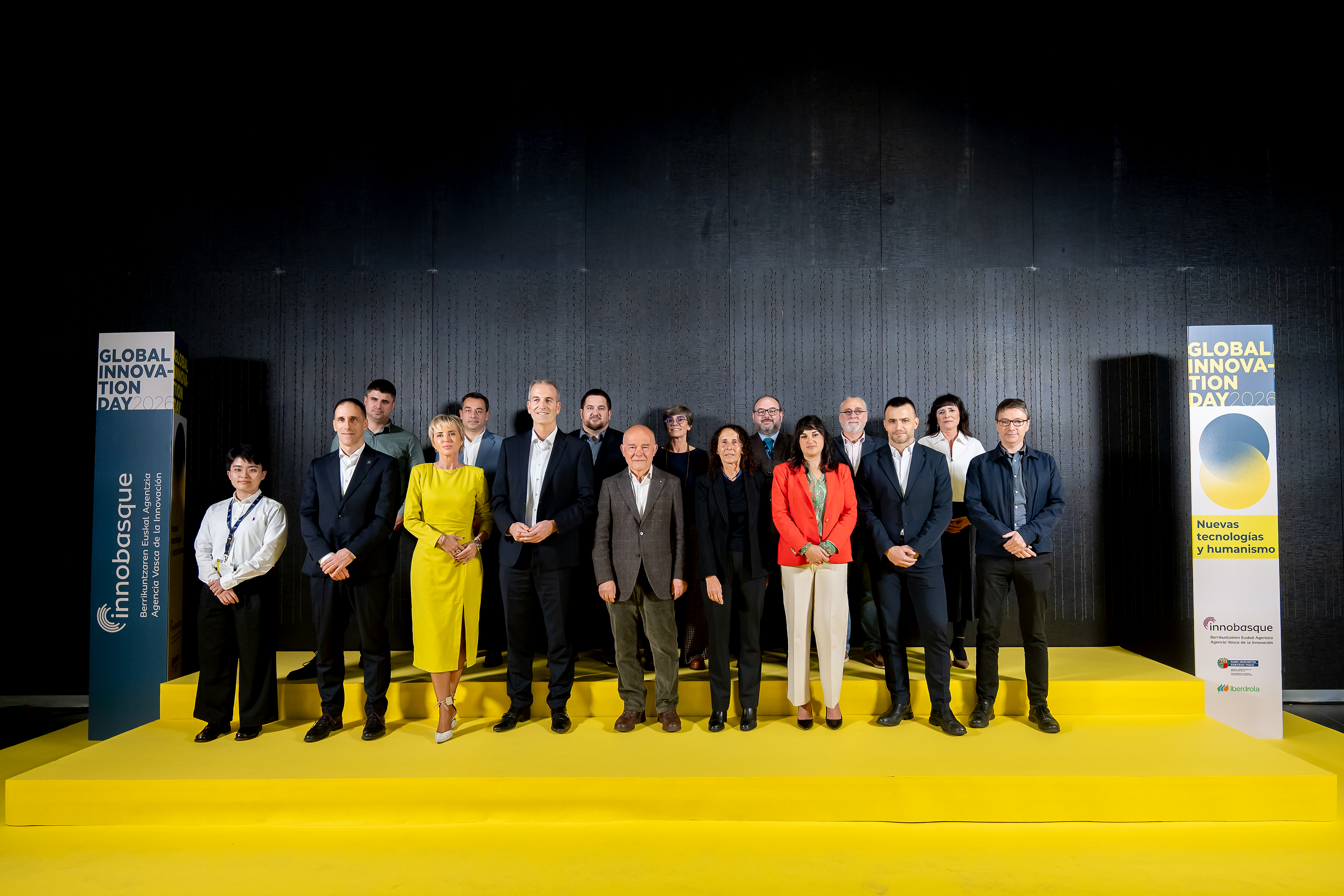
The 15th edition of Global Innovation Day has brought together nearly 400 representatives of the Basque innovation ecosystem under the theme “New Technologies and Humanism – Humanismoa eta teknologia berriak”, with opening remarks by Imanol Rego and a closing address by Juan Ignacio Pérez Iglesias.
Carme Artigas, former Secretary of State for Digitalisation and Artificial Intelligence, and Pello Rodríguez, President of the General Council of MONDRAGON Corporation, have analysed the challenges of technological sovereignty and the need for Europe and the Basque Country to develop their own capabilities in order to reduce strategic dependencies.
Eneko Agirre, Director of HiTZ Zentroa at the University of the Basque Country (EHU), and Javier Martínez Contreras, Director of the Centre for Applied Ethics at the University of Deusto, have explored the opportunities offered by artificial intelligence alongside the ethical and social questions raised by its development and application.
The event has showcased eight innovative solutions covering areas ranging from the circular economy and healthcare to artificial intelligence, industry and public administration.
The 15th edition of Global Innovation Day, organised by the Basque Innovation Agency, Innobasque, brought together nearly 400 representatives of the Basque Science, Technology and Innovation System today at the Euskalduna Conference Centre in Bilbao to discuss the challenges posed by the development of new technologies and their impact on society. Under the theme “New Technologies and Humanism – Humanismoa eta teknologia berriak”, the event focused on two issues shaping the future of Europe and the Basque Country: technological sovereignty and the ethical and social implications of artificial intelligence.
The event provided an opportunity to compare scientific, business and humanistic perspectives on these challenges and brought the debate closer to the reality of organisations through a participatory activity involving attendees. It also showcased eight innovative solutions developed in the Basque Country, demonstrating how research and technology can provide answers to business, scientific and public administration challenges.
The event was opened by Imanol Rego, President of the Basque Innovation Agency, Innobasque, with the support of the Basque Government’s Department of Science, Universities and Innovation and Iberdrola. In his speech, he highlighted the Basque Country’s ability to address technological transformations and argued that it should aspire to help lead them. “Do we simply want to adapt to these changes, or do we want to help lead them? I believe the Basque Country should aspire to the latter,” he stated. In this regard, he highlighted the talent, knowledge, companies, universities, technology centres and collaborative capacity of the Basque innovation ecosystem.
Rego stressed that innovation must deliver tangible results for society. “Innovation is not an end in itself. Innovation makes sense when it transforms, when it creates opportunities and when it improves people’s lives,” he noted. He also emphasised the importance of using knowledge and technology to solve real problems: “Innovation begins with knowledge and technology, but it acquires its true value when it solves a specific problem.”
In relation to this year’s theme, he called for people to be placed at the centre of technological development, particularly in the face of advances in artificial intelligence. “Artificial intelligence provides us with capabilities. People must contribute judgement, purpose and responsibility,” he stated. In this regard, he argued that “humanism does not seek to slow down technology. It seeks to give it direction.”
Finally, he called for greater ambition in the Basque Country to turn its capabilities into new businesses, better products, quality employment, well-being and opportunities. “We have capabilities. We have knowledge. We have talent. And we have an extraordinary ecosystem. Now we also need ambition,” he said. “The Basque Country must not limit itself to anticipating the future. It must help build it. And it must have the ambition to lead it,” he concluded.
The event also featured a range of artistic performances connecting tradition, creativity and new technologies. The San Sebastián-based company Aukeran Dantza presented a sample of its work, in which traditional Basque dance engages in dialogue with contemporary languages and forms of expression.
International collaboration was represented by Astryd Park, a quantum applications engineering professional and artist at London-based company Moth Quantum, whose work explores the intersection of quantum computing and generative art. Attendees were able to discover her installation “Reality Is Not What It Seems”, located at the venue entrance, which encodes video in real time using quantum algorithms. The project explores the potential of this technology as an expressive language and a tool for artistic creation, beyond its scientific applications.
Technology, ethics and responsibility in times of change
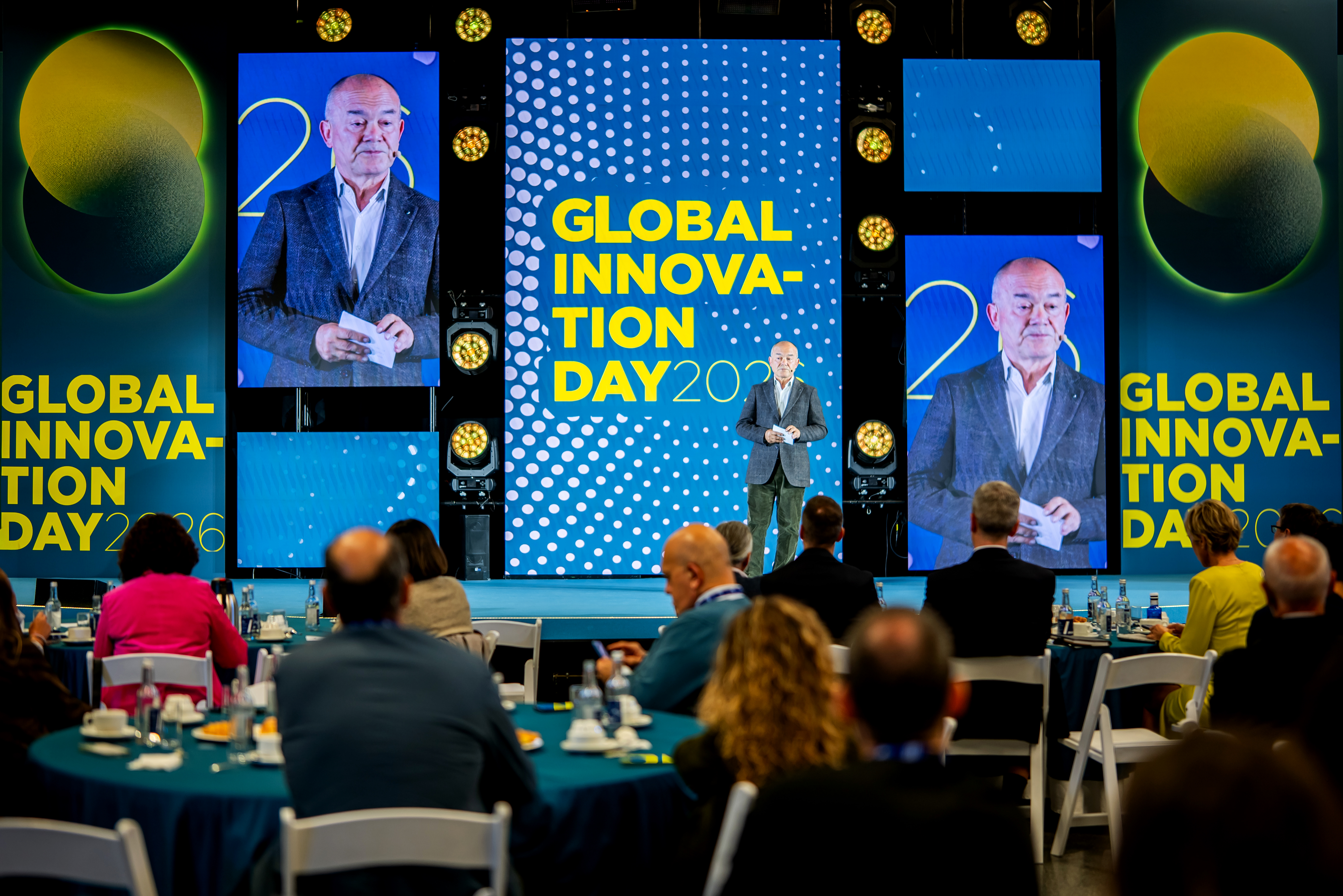
One of the central themes of Global Innovation Day was the discussion entitled “Technology, Ethics and Responsibility in Times of Change”, featuring Eneko Agirre, Director of HiTZ Zentroa at the University of the Basque Country (EHU), and Javier Martínez Contreras, Director of the Centre for Applied Ethics at the University of Deusto.
The conversation brought together Agirre’s scientific and technological perspective, focusing on the evolution of artificial intelligence, its capabilities and the opportunities opened up by research, with Martínez Contreras’s applied ethics perspective, which provided insights into the implications of its development and application. The discussion thus highlighted the need to incorporate ethical reflection into technological progress and to consider its effects on people and society.
The speakers discussed how artificial intelligence can be developed and integrated without compromising responsibility, autonomy and the human dimension. From a scientific and technological perspective, Agirre analysed the current capabilities of artificial intelligence and the possibilities offered by local models for developing solutions of our own. Martínez Contreras, in turn, raised the ethical questions surrounding a technology whose rapid development is also increasing its risks and potential consequences.
Topics addressed included privacy and the use of personal data, biases that may be introduced in the design of systems, and accountability for decisions delegated to these tools. Their effects on social, economic and political spheres were also considered, from their influence on public opinion to changes in the way information is accessed and knowledge is generated.
The discussion also addressed the role of open models and local developments in building artificial intelligence that is more accessible and better aligned with society’s needs. These alternatives make it possible to explore different ways of developing and applying this technology, strengthen our own innovation capabilities and help ensure that its benefits reach a wider range of people and organisations.
Technological sovereignty: a strategic necessity for Europe and the Basque Country
Technological autonomy and Europe’s ability to develop its own technologies and reduce dependencies in an increasingly competitive international environment were at the heart of the analysis of trends for the Basque Country at the 15th edition of Global Innovation Day.
To address this challenge, which is gaining importance on both the European and Basque agendas, the leading event for innovation in the Basque Country brought together Carme Artigas, Operating Partner at Nazca Capital and former Secretary of State for Digitalisation and Artificial Intelligence, and Pello Rodríguez, President of the General Council of MONDRAGON Corporation. Artigas contributed her experience in digital transformation and artificial intelligence, as well as her perspective on international technological trends. Rodríguez brought the debate closer to the reality of industry and business, drawing on his experience leading a corporation with a presence in more than 150 countries. The discussion was moderated by Leire Bilbao, Director General of the Basque Innovation Agency, Innobasque.
Bilbao opened the discussion by linking the ethical and responsibility issues raised in the previous conversation between Eneko Agirre and Javier Martínez Contreras on artificial intelligence to a new question: what capabilities do we need to ensure that decisions about our technological development remain in our hands? She pointed out that technologies such as artificial intelligence, semiconductors, data and computing infrastructures “have ceased to be merely tools for innovation and have become factors that determine the competitiveness, security and decision-making capacity of countries and organisations”.
The Director General of Innobasque placed this reflection within the context of the agency’s foresight work to analyse technological trends and their implications for the Basque Country. In this context, she explained the launch of the Consultative Working Group for the Assessment of Innovation Trends, which brings together leading scientific, technological and business figures from the Basque Country and the international arena. Its first meeting, held a few days before the event, confirmed that “technological autonomy or sovereignty can no longer be regarded as a future aspiration. It is becoming a strategic necessity that determines where we invest, what we research and how we innovate,” the Director General explained.
Bilbao pointed out that technological autonomy does not mean developing every technology independently, but rather preventing its use from creating dependencies that limit decision-making capacity. To achieve this, organisations need to understand the extent of their dependence on external providers, how much flexibility they have to switch solutions and whether they could maintain their activities if the conditions governing access to or provision of a service were to change. The question, therefore, is not only who develops the technology, but also who retains control over its use and can decide how and under what conditions it is used.
To illustrate this challenge, she referred to an image that emerged during the work of the trends group: building “hermitages” rather than large technological “cathedrals”. “Avoiding a situation in which everything depends on a single system that we cannot subsequently leave. Maintaining alternatives. Preserving room for manoeuvre,” she explained. This idea highlights the importance of not concentrating all capabilities in a single infrastructure or technological solution and of maintaining alternatives that allow organisations to adapt to change.
She also stressed that autonomy does not mean developing all capabilities internally or abandoning international collaboration. It means knowing what makes sense to acquire externally, what should be developed in partnership with others and which capabilities need to be preserved in order to maintain competitiveness and decision-making capacity. This challenge requires industry, science, technology and institutions to work together.
Building on this approach, Carme Artigas and Pello Rodríguez compared international and business perspectives on technological dependencies, the capabilities that Europe and the Basque Country need to preserve, and the opportunities this scenario offers for the business community and the Basque innovation system.
One of the new features of this edition was the introduction of a participatory activity designed to bring the debate into the everyday reality of the organisations attending the event. Seated around round tables, participants took part in a group exercise to apply the issues discussed during the session to their own organisations. Through an exchange of perspectives, they identified the challenges they considered most relevant and agreed on questions to be put to the speakers. Carme Artigas and Pello Rodríguez answered these questions, sharing their views on the challenges raised.
Eight innovative solutions developed in the Basque Country
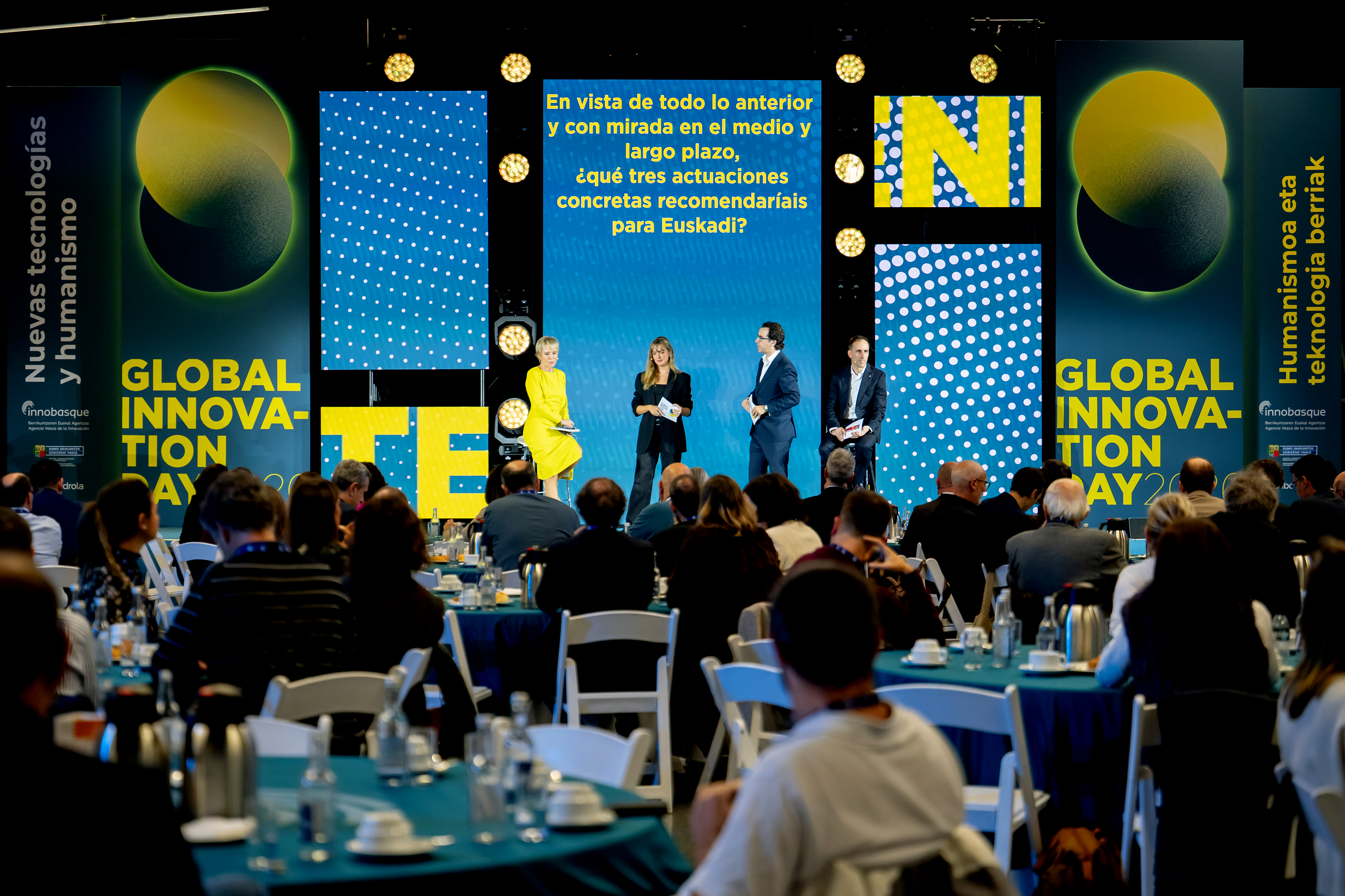
The event showcased eight innovative solutions developed in the Basque Country, reflecting the diversity and potential of the Basque innovation ecosystem to turn scientific and technological knowledge into new opportunities. The eight projects were selected as part of the seventh edition of Innobasque’s Practical Innovation Cases call, which received 52 proposals from 45 organisations. Presented in two sessions, the projects showcased solutions developed in the Basque Country in a wide range of fields, including urban management, the circular economy, healthcare, industrial transformation, climate risk prevention and food innovation.
In the first session, Jose Manuel Mato Fernández, Deputy Director of Smart Data and Corporate Services at BilbaoTIK, presented GeoBilbao, a tool that integrates more than a thousand geospatial datasets and makes this information available for municipal management. Its application facilitates the work of different City Council departments and helps improve urban planning and decision-making.
Ainhoa Martin Morante, Head of Circular Economy at Alba-Petronor, explained AGGREGACO2, a project that transforms Petronor’s industrial waste into synthetic aggregates for construction through a process that captures CO₂ and provides a lower-carbon alternative.
Innovation in healthcare was represented by Novanano Medical, whose technology for improving the safety of surgical implants was presented by its Scientific Director, Ramiro Couceiro. Its development aims to reduce bacterial adhesion and promote the integration of implants into bone.
Troquelería Enkarterri also took part. Its CEO, Aketza Romero, demonstrated how digitalisation connects the different stages of production and is helping the company diversify its activities into sectors such as aerospace, defence and energy.
The second session focused on other applications of artificial intelligence, collaboration and research to address emerging challenges.
Jagoba Lupiola Chamorro, CEO of Intellialert Technologies, presented FAST Intellialert, a platform combining artificial intelligence with meteorological, hydrological and geospatial data to anticipate floods and other climate-related events, supporting prevention and decision-making.
In the field of food innovation, Arantza Madariaga, Director of the ELIKA Foundation, introduced Ontzi Hub, an initiative connecting companies across the food supply chain with packaging suppliers and technology stakeholders to develop safer, more sustainable and more competitive packaging solutions.
Carlos García Villate, CTO of Lantek, explained iQuoting, an artificial intelligence tool that uses real production data and industrial knowledge to streamline quotation processes in the sheet metal cutting sector.
Finally, Leire Arantzamendi, Senior Researcher at the AZTI Foundation, presented BIOGEARS, a project focused on developing biodegradable ropes for aquaculture, an alternative to fossil-based plastic materials that aims to reduce the environmental impact of this activity.
The closing address at the 15th edition of Global Innovation Day was delivered by Juan Ignacio Pérez Iglesias, Basque Government Minister for Science, Universities and Innovation. He brought the institutional proceedings to a close after a day in which nearly 400 representatives of the Basque Science, Technology and Innovation System had the opportunity to analyse the changes transforming the technological and economic landscape, exchange perspectives and learn about initiatives already providing solutions to today’s challenges.