Researchers reveal how some cartilage cells can turn into bone cells
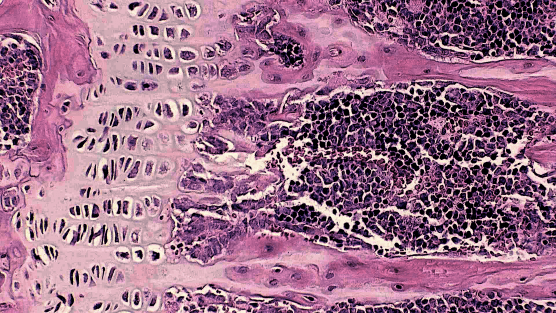
A study by the University of the Basque Country (EHU) and CIC biomaGUNE identifies mechanisms that could guide future research into bone development and regenerative medicine
An international team led by Dr Ander Abarrategi at the University of the Basque Country / Euskal Herriko Unibertsitatea (EHU) and CIC biomaGUNE has deciphered the molecular mechanisms that cause some cartilage cells to become bone cells.
Stem cells are found in almost all tissues of the body and have the ability to divide and differentiate into various types of specialised cells, as well as to self-renew to produce more stem cells. Stem cells from the bone marrow and the bone growth plate (located at the ends of long bones) give rise to cells that form bone and cartilage tissues, respectively. Long bones form and grow lengthwise through a process in which chondrocytes (cartilage cells) first form in the growth plate, mature, and are subsequently replaced by osteoblasts (bone-forming cells).
“Rethinking the basic concepts of biology not only enables us to better understand these processes, but can also help us develop more effective therapies,” says Dr Ander Abarrategi. Building on this idea, an international study led by the researcher from the University of the Basque Country (EHU) and CIC biomaGUNE, and published in the journal Bone Research, has shown that “during development, some cartilage cells become bone cells”. This finding challenges the belief that bone cells originate solely from bone marrow stem cells. In other words, “a newly formed bone can originate from both bone marrow-derived stem cells and cartilage cells that have transitioned into bone cells,” notes the researcher.
In vitro and in vivo tools
The research team has developed in vitro and in vivo tools capable of modelling bone formation, which has enabled them to track, map and study the transition from cartilage to bone. In this way, new insights have been gained into the mechanisms and signalling pathways involved in cartilage-derived bone formation. “This study has demonstrated that this transition does indeed occur, and we have also been able to uncover the mechanisms involved in this process of bone growth.”
To this end, “we developed a series of modelling tools and methods that helped us define the molecular events triggering the formation of osteoblasts (bone cells) derived from chondrocytes (cartilage cells) and identify the key signalling pathways and transcription factors involved in this process,” explains the researcher from the Department of Cell Biology and Histology at the University of the Basque Country (EHU).
This study provides new insights into the process of transition from cartilage to bone, which could help guide future research into bone development and regenerative medicine. On the one hand, “we now have a better understanding of the ossification process, and therefore have new targets for attempting to improve its repair,” notes Abarrategi. On the other hand, “now that this process has been defined, could it have any bearing on the genesis of bone tumours? Could a defective transition lead to the development of osteosarcomas or chondrosarcomas?”, he asks.
All of this highlights once again “the importance of fundamental research. Defining basic biological concepts relating to tissue formation has the potential to open up new avenues of research and develop new therapies”, he concludes.