Spain will reduce its greenhouse gas emissions by 0.5% by 2025
The Observatory on Energy Transition and Climate Action (OTEA), an initiative of the Basque Centre for Climate Change (BC3) research centre, has published its annual report
The findings highlight the increase in renewable energy capacity installed, totalling 11.4 GW – the highest figure on record – and sales of electric passenger cars, which doubled compared to 2024
The Observatory on Energy Transition and Climate Action (OTEA), an initiative of the Basque Centre for Climate Change (BC3) research centre, has published its Annual Report on Energy Transition and Climate Action for the 2025 financial year. The document outlines the evolution of various climate and energy-related indicators, as well as their implications for the economy and society.
The methodology used enables an estimate of emissions for the year and provides an assessment of developments during 2025. The main findings are as follows:
- In 2025, greenhouse gas emissions will fall by 0.5% compared with 2024. Emissions will stand at 267 million tonnes of carbon dioxide equivalent (with an uncertainty range of 264 MtCO₂-eq to 271 MtCO₂-eq).
- Strong economic and population growth drive emissions upwards. Improvements in energy intensity offset the effects of the economy and population growth. Emissions per unit of GDP fall by 3%.
- The reinforced operation of the electricity system following the blackout on 28 April increases the use of combined-cycle power stations, and emissions from the electricity sector rise by 11%.
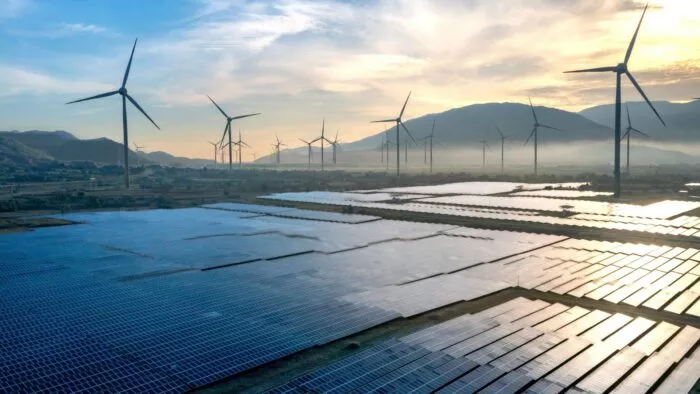
- In 2025, 11.4 GW of renewable capacity is installed, of which 10.2 GW is from solar photovoltaic and 1.2 GW from wind power. This figure represents the largest annual increase in the historical series.
- With the closure of most coal-fired power stations, by 2025 the use of coal for electricity generation is practically zero.
- Across the economy as a whole, the share of renewables reaches 25.4%, and remains virtually unchanged from last year.
- The share of electricity in final energy consumption shows a slight increase, standing at 25.3%.
- Sales of electric passenger cars reach 248,000 units in 2025, double the figure for 2024
- Energy prices show little change from the previous year and remain at historically high levels.
- Green employment continues to grow, reaching 541,463 full-time equivalent jobs.
- The full study, produced by the team of experts at BC3, can be viewed here.
Policy Brief: Energy Crisis
In parallel, on 18 March, OTEA published the policy brief “Fiscal measures in response to the energy crisis: electricity price cuts vs. fuel subsidies”, with the aim of analysing alternatives to mitigate the energy crisis resulting from the war in Iran, which we share in this newsletter. The document highlighted the need to target aid and avoid blanket subsidies or VAT reductions on fossil fuels, due to their regressive nature and incompatibility with decarbonisation.
On 20 March, the Government presented a package of measures including a reduction in the price of all energy products and structural measures to accelerate the energy transition. In this context, OTEA makes the following recommendations:
- Remove tax breaks on fossil fuels as soon as possible and, if prices continue to rise, focus support on low-income households.
- Make tax reductions on electricity permanent, given their effectiveness and progressive nature, as well as their contribution to the electrification of the economy, as demonstrated in our Policy Brief.
- Maintain the momentum behind measures targeting vulnerable groups, such as social electricity and heating subsidies and reduced public transport fares.
- Strengthen tax relief for renewable energy, electric vehicles and heat pumps.