TECNALIA leads the installation in Mutriku of a floating eco-concrete structure for offshore photovoltaics
The low-carbon eco-concrete is high-performance and contains bio-based anti-fouling materials, making it an environmentally friendly solution.
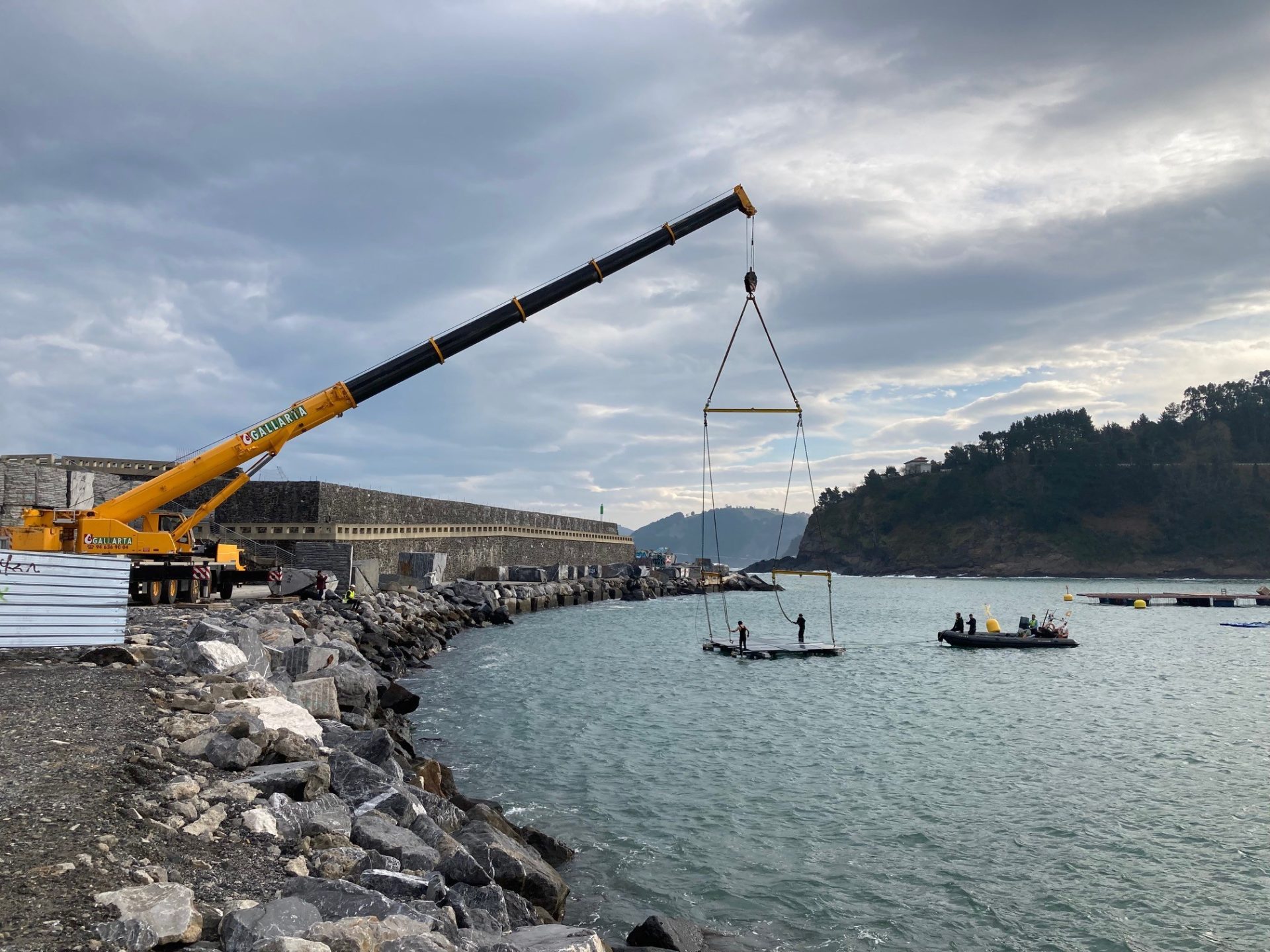
The TECNALIA research and technological development centre has led the installation of a new floating photovoltaic structure at its marine laboratory in Mutriku. The structure has been built using a new high-performance eco-concrete, which is also low-carbon and environmentally friendly. In addition, new anti-fouling coatings developed from biomass compounds have been applied to this platform, helping to reduce environmental impact and extend the system’s useful life. The deployment is part of the European Natursea-PV project, which develops innovative and sustainable structures and materials for offshore solar energy.
TECNALIA, in collaboration with Natursea-PV partners (Preffor, RDC, Polymat and EHU), has placed this scale structure in the sea to validate competitive and sustainable solutions for solar energy generation at sea. To analyse its effectiveness, the structure and materials have undergone laboratory tests to assess their structural behaviour, durability and energy efficiency before being installed in the Mutriku marine laboratory.
This laboratory, unique in its category, also allows companies in the energy sector to validate their developments for offshore photovoltaic technologies in a controlled and real environment. With this new development, TECNALIA reinforces its capacity to collaborate with industrial agents seeking innovative solutions in the field of floating solar energy.