E-OilÉ is revolutionising small-format packaging
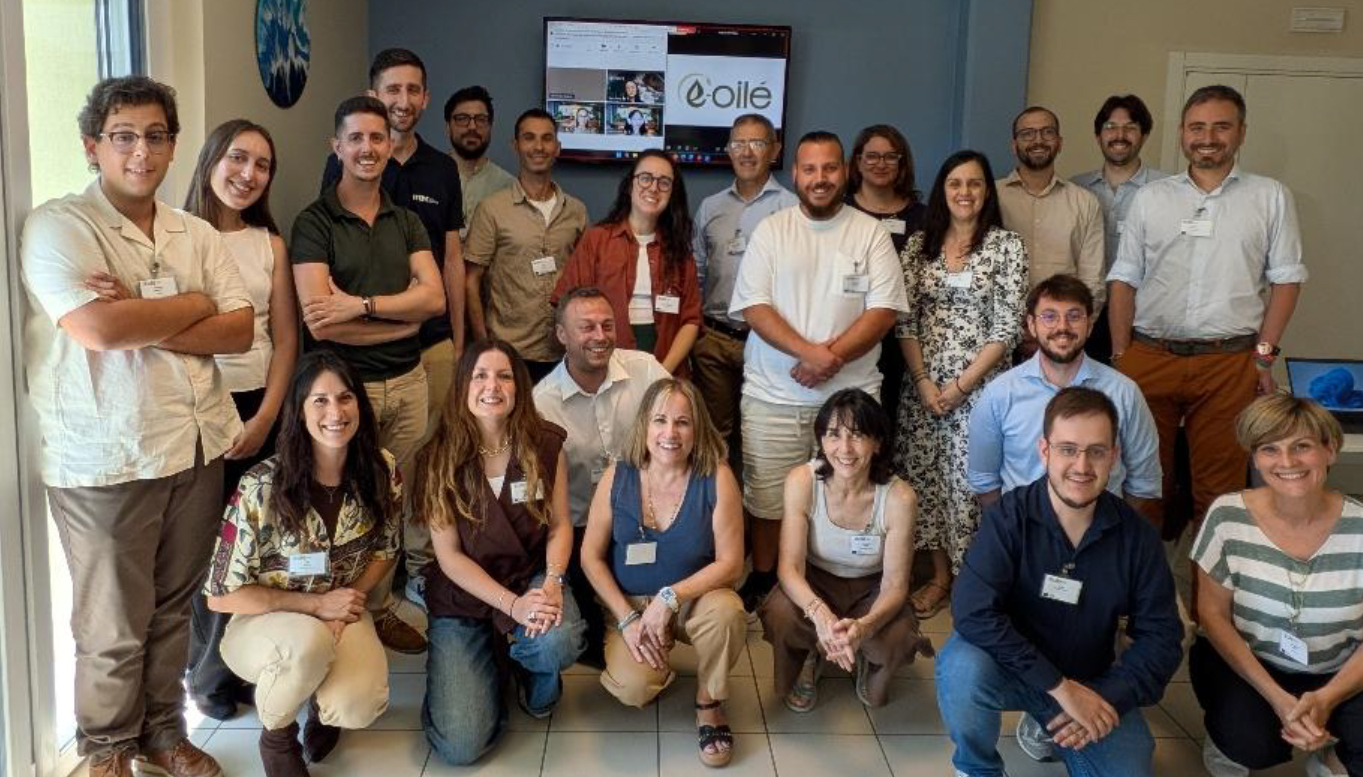
One year after its launch, the European E-OilÉ project is making significant scientific progress and bringing together an ever-growing community, reinforcing its path towards the development of biodegradable small-format, single-use packaging for food and cosmetic products.
The E-OilÉ project, coordinated by GAIKER Technology Centre, aims to develop a sustainable alternative to the billions of sachets and small-format packaging units made from fossil fuels that are used every year and may ultimately end up in the environment. To achieve this, the project is developing biodegradable, safe and industrially scalable packaging that will support more sustainable consumption models without compromising product quality or functionality.
One year after its launch, the project is progressing successfully, delivering major scientific advances and promising results.
In this context, the 15 partners that make up the consortium met in Novara (Italy) to share the key achievements and results obtained during the project’s first year and to define the next lines of work. This meeting marks another step forward in the development of safe, sustainable, biodegradable and recyclable single-use packaging.
One of the project’s key achievements has been the definition of the “Safe and Sustainable by Design” (SSbD) criteria. ITENE has defined and documented the preliminary SSbD criteria for the four use cases, providing the consortium with a common, rigorous and evidence-based framework for evaluating the materials developed within the project.
Building on this work, the first batches of new biodegradable biomaterials based on biopolyesters (developed by Novamont), enriched with olive oil by-products (MYROLION) and polysaccharide-based compounds (developed by OIMO), have undergone extensive testing at GAIKER, have been digitally replicated and are now being assessed for market opportunities.
At the same time, OIMO and Novamont have developed the first plant-based bioplastic films, which have been sent to the Danish Technological Institute to assess their biodegradability. The initial results obtained point to the significant potential of these materials.
The results of these tests are, in turn, feeding the artificial intelligence model developed by the NORCE research centre. This tool will function as a digital twin capable of modelling and predicting the behaviour of the new materials during biodegradation, both those developed within the scope of the project and those that may be developed in the future.
Technological progress is also being accompanied by a strategy aimed at the future exploitation of project results. In this area, PNO Innovation has identified the first results with commercialisation potential and has defined possible routes to market for the packaging solutions developed within E-OILÉ, thereby paving the way for their future market uptake.