BCBL researcher becomes a new member of the Spanish Young Academy
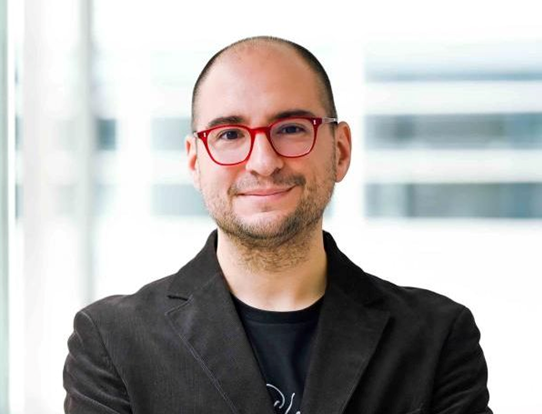
Alejandro Tabas, head of the ‘Perceptual Inference’ group, is one of 10 people selected by the institution in its latest call for applications
An Ikerbasque and Ramón y Cajal researcher at BCBL, he coordinates a team of nine people studying how the brain perceives sounds and images
Alejandro Tabas, an Ikerbasque and Ramón y Cajal researcher at the Basque Center on Cognition, Brain and Language (BCBL), has been selected as one of the 10 new members of the Spanish Young Academy in its 2026 call for applications.
The institution, which is associated with the Institute of Spain, has been promoting science as a career choice among young people since 2019, giving young researchers a voice and raising their visibility. The medals were presented to the new members of the Academy this Thursday, 26 November.
The distinction recognises Alejandro Tabas’s career. Since 2024, he has headed one of BCBL’s research groups while also serving as an associate researcher at the Max Planck Institute in Leipzig. In 2023, he received a European Research Council (ERC) Starting Grant from the European Union to study perceptual inference in subcortical areas.
“One of my aims as an Academy member is to develop initiatives that transform the public’s perception of science, helping people see it as a tool for gaining a clearer understanding of the reality around us. This recognition gives me a unique opportunity to involve citizens in our discoveries and restore their confidence in our work,” says Alejandro Tabas.
His team at the San Sebastián-based centre, which currently consists of nine people, focuses on four main research areas: studying the brain circuits responsible for interpreting the sounds we hear; analysing how humans learn the information needed to correctly identify sensory signals, in both hearing and vision; training artificial neural networks to understand the brain; and collaborating with clinical specialists to understand why each person perceives the world differently.
Recent discoveries
In recent months, this research has led to notable scientific discoveries and advances, which have been published in prestigious journals.
For example, in collaboration with a clinical laboratory in Dresden, Germany, the group has discovered that the activity of certain structures in the auditory brain of people with dyslexia is less dependent on their expectations about what they are going to hear than it is in neurotypical individuals.
“When we hear sounds, our expectations modulate the activity of the brain areas involved in hearing. If we know that something is going to happen, the brain needs to use fewer resources to process the sound, whereas unexpected sounds trigger much greater brain activity,” explains Alejandro Tabas.
According to the researcher, the group’s latest discovery concerning people with dyslexia will help shed light on the cognitive processes that make language learning more difficult for them.
About the Spanish Young Academy
Founded in 2019 by a group of researchers belonging to the Global Young Academy, the Spanish Young Academy is an institution that appoints 10 new members each year. Membership is limited to five years in order to maintain the youth of its approximately 50 members.
The Academy is distinguished by its multidisciplinary nature, bringing together professionals from fields as diverse as computer science, engineering, archaeology, cultural anthropology, palaeontology, pharmacy, veterinary science, biology, chemistry, psychology, physics, European politics and culture, tourism, art history, dance, neuroscience, ecology, environmental science, mathematics, artificial intelligence, sports science, linguistics, philology, food technology and philosophy.