NEIKER secures three new projects to address the main challenges facing the livestock industry through innovation and new technologies
The research will focus on early disease detection, animal welfare, and the impact of climate change on livestock production
The three projects were selected through the “Knowledge Generation Projects – INIA-CCAA Targeted Research” call for proposals, funded by the State Research Agency under the Ministry of Science and Innovation
Against a backdrop of rising costs and increasingly tight margins, innovation is an essential tool for strengthening the profitability and sustainability of farms
NEIKER is strengthening its strategic lines of research in livestock farming with three new projects focused on some of the sector’s main challenges. The research will advance early detection of bovine paratuberculosis and the selection of animals resistant to this disease from birth, improve the welfare of slow-growing chickens through new environmental predictors, and apply artificial intelligence to reduce the impact of climate change on dairy cattle productivity.
By strengthening these lines of work, NEIKER—an agency under the Basque Government’s Department of Food, Rural Development, Agriculture, and Fisheries—is solidifying its commitment to applied research that combines technological innovation, animal welfare, and environmental sustainability. Through digitization, continuous monitoring using sensors, and advanced data analysis, the center is developing new tools capable of transforming the information generated on farms into useful knowledge for decision-making, contributing to a more resilient, efficient, and competitive livestock industry.
The three projects have been selected in the Ministry of Science and Innovation (MCIN) call for proposals titled “Knowledge Generation Projects – INIA-CCAA-Oriented Research,” which funds research initiatives aimed at addressing the main challenges facing the agri-food sector.
“Securing three projects in one of the most competitive calls for proposals in Spanish research demonstrates NEIKER’s ability to position itself at the forefront of agricultural and livestock research and to transform scientific knowledge into innovative solutions for one of the most strategic sectors of our economy,” notes Dr. Joseba Garrido, scientific director of NEIKER.
“These projects reflect our commitment to research that has a real impact on the livestock sector, addressing key challenges such as disease prevention, improving animal welfare, reducing environmental impact, and increasing production efficiency. In a context of rising costs and increasingly tight margins, innovation is an essential tool for strengthening the profitability and sustainability of farms,” he adds.
EARLY-PTB: New Tools for Earlier Detection of Paratuberculosis and Breeding More Resistant Cattle
The EARLY-PTB project, coordinated by Dr. Marta Alonso of NEIKER’s Department of Animal Science in collaboration with SERIDA’s Center for Animal Biotechnology, aims to improve the early detection of bovine paratuberculosis and advance the selection of animals with greater natural resistance to this disease. The ultimate goal is to provide veterinarians and livestock professionals with tools that will enable them to identify, from an early age, both infected animals and those with greater resistance to infection by Mycobacterium avium subsp. paratuberculosis (MAP), the agent that causes bovine paratuberculosis.
With a budget of 506,250 euros over three years, the project will combine new diagnostic techniques with “omics” analyses that allow for the simultaneous analysis of thousands of biological markers to detect infection earlier. In collaboration with the University of Edinburgh, the project will also study new genetic and epigenetic markers to select calves with greater resistance from birth. This knowledge could be transferred to national and international genetic improvement organizations. In addition, it will validate a rapid, low-cost genetic test that will help the industry breed more resistant herds.
According to Alonso, “EARLY-PTB tackles one of the main challenges in dairy cattle health: detecting a disease that is difficult to diagnose in its early stages and reducing its impact on dairy farms, which incur losses exceeding 364 million euros annually in the EU alone.”
The project combines various disciplines and technologies, including omics tools, to offer useful solutions to the sector, with benefits for animal health, farm profitability, and, potentially, public health as well. Furthermore, Alonso explains, “the possible link between MAP and human inflammatory bowel diseases adds a significant public health dimension, extending the potential impact beyond the veterinary sector.”
SloWelAir: Continuous Monitoring to Improve the Well-Being of Slow-Growing Chickens
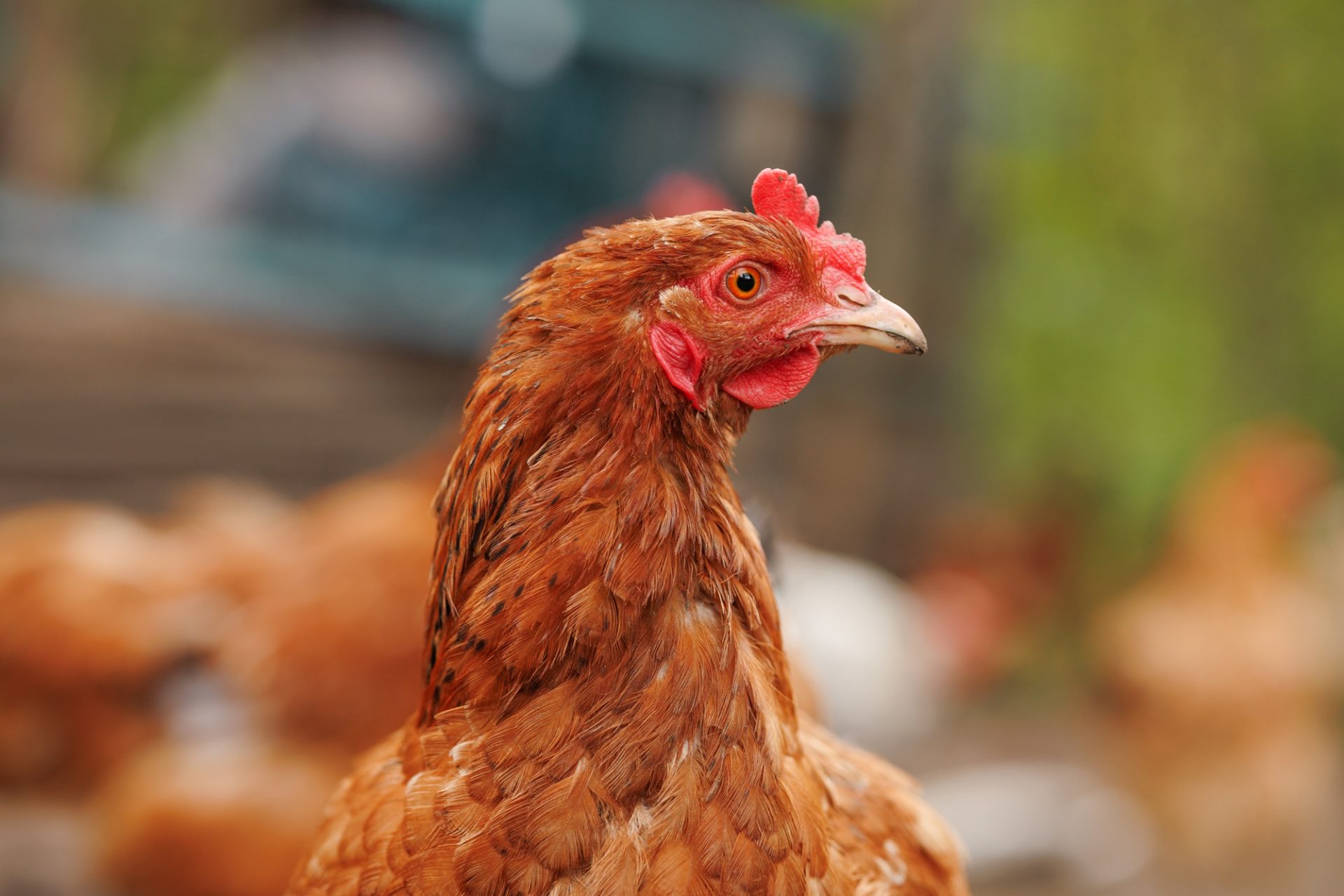
The SloWelAir project, led by researcher Xavier Averós—also from NEIKER’s Department of Animal Science—will develop new environmental predictors capable of linking on-farm environmental conditions to the health, animal welfare, and production efficiency of slow-growing chickens both on the farm and at slaughter.
With a budget of 83,760 euros over three years, the project will continuously monitor environmental conditions in the barns throughout complete production cycles. This data will be combined with indicators of health, welfare, and production performance to identify which environmental variables have the greatest impact on the animals.
The main innovation of SloWelAir is that it will apply advanced data analysis techniques to develop environmental predictors that will make it possible to anticipate risky situations and facilitate more precise management of farm conditions.
“We hope to identify environmental predictors based on continuous environmental measurements—one data point every 5 minutes—that will better capture and reflect the dynamic nature of the interactions between the environment, bird welfare, and productivity, compared to the one-off measurements of environmental parameters we’ve had to date,” explains Xavier Averós. “We also hope that our work will enable management and animal-handling decisions aimed at better controlling the environment in production houses. This will make it possible to anticipate potential problems caused by high gas concentrations and heat stress, resulting in an effective improvement in the welfare and production efficiency of the chickens,” he adds.
DAIRYTEK: Artificial Intelligence to Reduce the Impact of Climate Change on Dairy Cattle Productivity
The DAIRYTEK project, coordinated by Pilar Merino, head of NEIKER’s Department of Natural Resource Conservation, and carried out in collaboration with the University of Vigo, aims to improve the environmental management of dairy cattle farms by integrating data from IoT sensors, production information, and artificial intelligence models.
With a budget of 363,750 euros over three years, the project will analyze environmental data from dairy farms in real time, along with information on milk production, to develop predictive models capable of forecasting heat stress events and assessing the impact of environmental conditions on production. In addition, the project will integrate these predictive models into the kABE digital platform, developed by NEIKER to optimize livestock management through real-time data analysis.
According to Merino, DAIRYTEK stands out in particular for two reasons: “On the one hand, because of the complementary nature of the teams, with a clearly multidisciplinary approach. We collaborate with the University of Vigo, which has experts in computer science, while NEIKER contributes the agronomic and environmental perspective. On the other hand, it will enhance the kABE platform and equip it with operational intelligence by integrating models with real-time data collected from farms in the Basque Country and Galicia, which will give us a very comprehensive view of the diversity of dairy farms in northern Spain.”