A new generation of antibacterial surfaces to prevent routes of infection
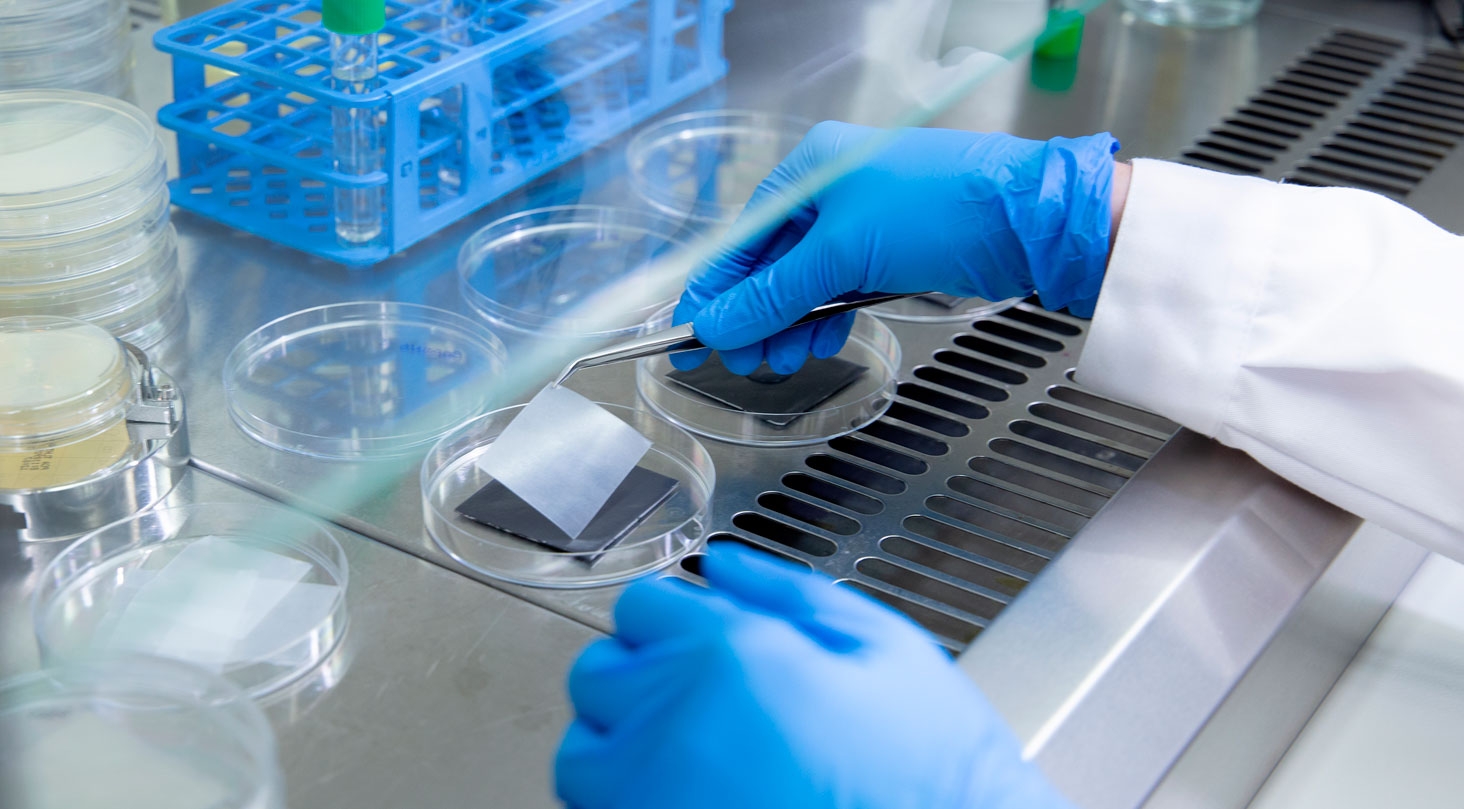
The Tekniker technology centre has coordinated the design and development of smart antimicrobial coatings as part of the European RELIANCE project
Infections caused by pathogenic microorganisms and the growing resistance of bacteria to antibiotics represent one of the greatest health and economic challenges worldwide. Germs can survive for months on frequently touched everyday surfaces, causing thousands of infections, around 110,000 deaths each year in Europe and more than €1.5 billion in healthcare costs and productivity losses.
Traditional methods for reducing infections in public, healthcare and industrial settings have relied on disinfectants and coatings based on petroleum-derived synthetic chemicals. However, these conventional solutions have significant limitations: they can have a negative impact on the environment and even on human health, they are not biodegradable and they can contribute to the emergence of microbial resistance.
Against this backdrop, the Tekniker technology centre, a member of the Basque Research and Technology Alliance (BRTA), has coordinated the European RELIANCE project, focusing on the design and development of a new generation of bio-based, low-environmental-impact self-disinfecting coatings to prevent the transmission of microorganisms via metal surfaces.
The main aim of the research has been to develop safer and more sustainable antimicrobial solutions through the use of naturally derived compounds, such as essential oils obtained from non-food crops and antimicrobial peptides derived from protein-rich by-products. To achieve this, these compounds have been incorporated into advanced encapsulation systems and functional nanoparticles capable of protecting different types of materials used in healthcare, domestic and industrial settings.
Unlike conventional biocides, which continuously release their active agents, the coatings developed as part of the project incorporate controlled-release mechanisms that respond to specific environmental stimuli, such as temperature fluctuations or changes in acidity (pH) levels. This means that the antimicrobial compounds are activated only when the appropriate conditions arise, improving their effectiveness, extending their service life and reducing both the consumption of active substances and their impact on the environment.
“RELIANCE represents a qualitative leap forward compared with traditional chemical solutions. We are providing industry and society with highly effective, safe and sustainable coatings designed according to eco-design and circular economy principles, with the aim of eliminating the use of fluorinated or polluting substances and enabling treated materials to be recycled at the end of their service life,” says Miren Blanco, a researcher at Tekniker.
The development of these solutions has drawn on Tekniker’s expertise in the design of advanced materials and nanomaterials, encapsulation technologies, surface functionalisation and industrial transfer processes, areas in which the centre has a strong track record in applied research.
Validation in three use cases
The new technologies developed as part of the project have been successfully validated in three use cases in sectors with stringent hygiene and durability requirements.
In the automotive sector, permanent coatings have been applied to frequently touched interior plastics in shared vehicles to ensure continuous hygienic protection in environments with high user turnover.
In the field of household appliances, a surface treatment has been tested in refrigerator compartments that reacts to fluctuations in pH levels to inhibit the growth of foodborne bacteria such as Listeria.
In the field of technical and healthcare textiles, the project has developed a solution for garments used in hospital environments and pharmaceutical facilities. The smart coating releases the antimicrobial agent during normal use of the garment, when it is in contact with the wearer, while reducing its activity during high-temperature washing cycles. This prevents unnecessary loss of the active substance and helps extend the durability of the treatment.
Through these developments, the project aims to reduce the transmission of infections in professional and domestic environments, minimising exposure to harmful chemicals and providing European industry with competitive solutions aligned with the circular economy.
Funded by the European Union’s Horizon Europe programme, RELIANCE (Smart response self-disinfected biobased nanocoated surfaces for healthier environments) had a budget of €5 million and brought together an interdisciplinary consortium of 15 partners from 10 countries.