CIC energiGUNE Brings Together International Battery Science Leaders in Vitoria-Gasteiz to Celebrate the Legacy of Michel Armand
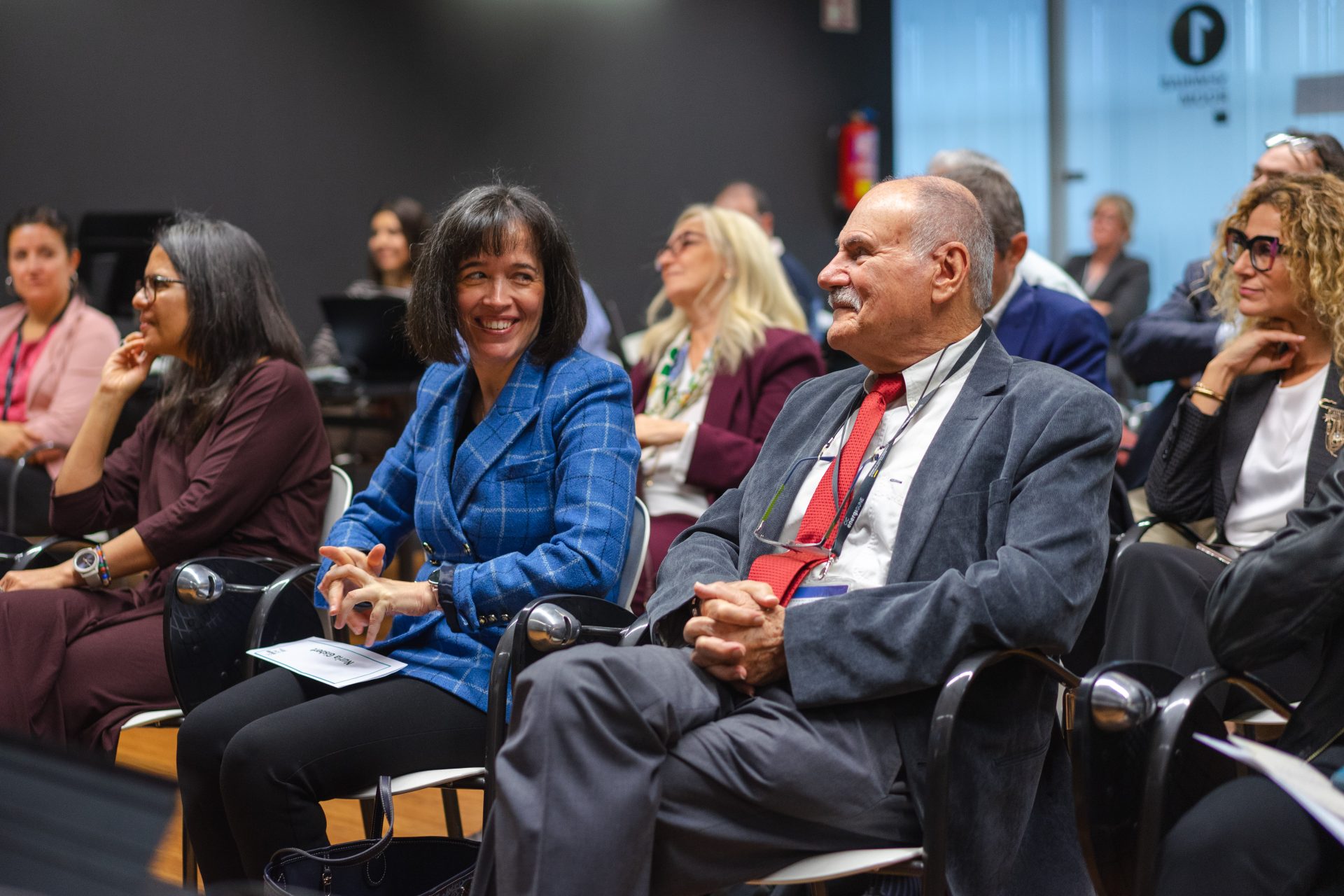
The event “Shaping Electrochemical Energy Storage: The Michel Armand Scientific Journey” brought together leading international scientists and institutional representatives in Vitoria-Gasteiz to review more than five decades of Michel Armand’s contributions to the development of modern batteries.
Held to mark his 80th birthday, the event also highlighted his influence on several generations of researchers and the role of CIC energiGUNE in nurturing and consolidating new scientific talent in the field of energy storage.
Michel Armand is Honorary Scientific Director of the Electrochemical Energy Storage and Conversion area at CIC energiGUNE and one of the world’s leading figures in electrochemistry and battery science.
CIC energiGUNE, a leading research centre specialising in electrochemical and thermal energy storage and conversion, hosted “Shaping Electrochemical Energy Storage: The Michel Armand Scientific Journey” in Vitoria-Gasteiz, an international event organised to celebrate the 80th birthday of Professor Michel Armand, Honorary Scientific Director of the centre’s Electrochemical Energy Storage and Conversion area. The celebration also coincides with CIC energiGUNE’s 15th anniversary. Armand joined the centre in 2011, the same year it was established.
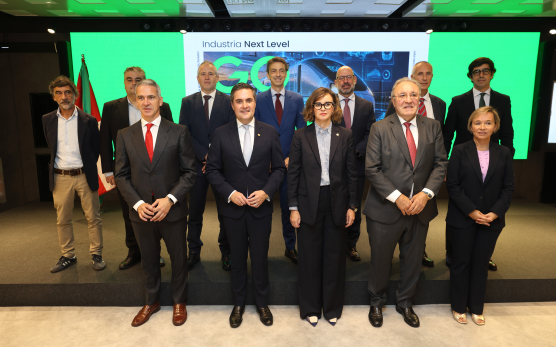
The event brought together researchers from some of the world’s leading universities, research centres and companies working in electrochemical energy storage, alongside representatives of the Basque Government and CIC energiGUNE. It provided an opportunity to recognise Armand’s outstanding career and to reflect on the enduring relevance of ideas that have shaped battery science for more than half a century and continue to influence the development of new energy storage technologies today.
Several of the concepts pioneered by Michel Armand decades ago, including solid polymer electrolytes and the development of new materials and salts to enhance ion transport, are now central to research aimed at creating the next generation of batteries. These include solid-state batteries, whose development seeks to increase energy density and improve safety performance, both of which are particularly important for applications such as electric vehicles.
Among the distinguished participants were Maria Forsyth, Ikerbasque Research Professor at POLYMAT and a specialist in advanced electrolytes and batteries; Steve Visco, Co-founder and CEO/CTO of PolyPlus, specialising in advanced lithium batteries; Maria Rosa Palacín, researcher at ICMAB-CSIC and expert in post-lithium-ion technologies; Christian Masquelier, Director of the Laboratoire de Réactivité et de Chimie des Solides (LRCS, CNRS-UPJV), specialising in lithium and sodium battery materials; and Władysław Wieczorek, Professor at the Warsaw University of Technology and member of the Chemistry Committee of the Polish Academy of Sciences (PAN), specialising in electrolytes for electrochemical devices.
The programme was therefore conceived as a collective journey through the evolution of electrochemical energy storage and the major scientific advances to which Michel Armand has contributed throughout his career.
More Than Half a Century Transforming Battery Science
Born in France in 1946, Michel Armand has built a scientific career spanning more than five decades across France, the United States, Canada and the Basque Country.
His early work focused on intercalation materials, one of the fundamental principles on which the lithium-ion battery would later be developed, a technology that has enabled everything from portable electronics to the widespread adoption of electric vehicles.
In the late 1970s, Armand pioneered the development of solid polymer electrolytes, decades before solid-state batteries became a major research focus for manufacturers and technology centres worldwide.
Nearly half a century later, solid electrolytes remain a key area of research in the development of new battery generations. The continued relevance of this field directly links Armand’s early contributions with some of the technological challenges currently facing the industry.
“Many of the scientific questions Michel raised decades ago are now at the very heart of battery research. His ability to anticipate the future direction of electrochemical energy storage explains the lasting relevance of a legacy that continues to inspire new lines of investigation,” said Nuria Gisbert, Director General of CIC energiGUNE.
Throughout his career, Armand also contributed to the development of the “rocking-chair” battery concept, the creation of new electrolyte salts and the enhancement of lithium iron phosphate (LiFePO₄) through conductive carbon coatings.
His achievements also include a patent for cathode materials for rechargeable lithium batteries, on which he is listed as co-inventor alongside John B. Goodenough, who received the 2019 Nobel Prize in Chemistry for his role in the development of lithium-ion batteries, and other researchers.
After completing his education in France, Armand arrived at Stanford University in 1970 as a Fulbright Fellow. He later developed his career at the CNRS, Lawrence Berkeley Laboratory and the Université de Montréal. In 2011, he joined CIC energiGUNE, where he has played a pivotal role in consolidating research into polymer electrolytes and solid-state batteries.
His career has been recognised through numerous international awards in electrochemistry and energy storage. Among the most recent is the ISE Prize for Electrochemical Energy Conversion and Storage in Honour of Bruno Scrosati, awarded in 2026 by the International Society of Electrochemistry in recognition of his contributions to the advancement of electrochemical energy storage. This distinction is complemented by his continued presence among the world’s most influential researchers in the Clarivate and Stanford–Elsevier rankings.
From One Generation of Scientists to the Next
The event also highlighted another important dimension of Michel Armand’s scientific legacy: the transmission of knowledge between generations.
Many of the researchers gathered in Vitoria-Gasteiz have shared projects, laboratories and stages of their careers with him, while others represent later generations who have developed new scientific directions based on concepts first formulated decades ago.
This influence is clearly reflected within CIC energiGUNE. Since joining the centre in 2011, Armand has contributed not only to the development of new research lines but also to establishing an environment capable of attracting and training international talent in electrochemical energy storage.
In this way, “Shaping Electrochemical Energy Storage: The Michel Armand Scientific Journey” served to connect past and future: recognising the career of one of the scientists who helped develop essential concepts underpinning modern batteries, while shining a spotlight on the new generation of researchers who continue to advance the technologies that will shape the future of energy storage.