Lung fluid-inspired nanoparticles enhance therapies targeting the respiratory system
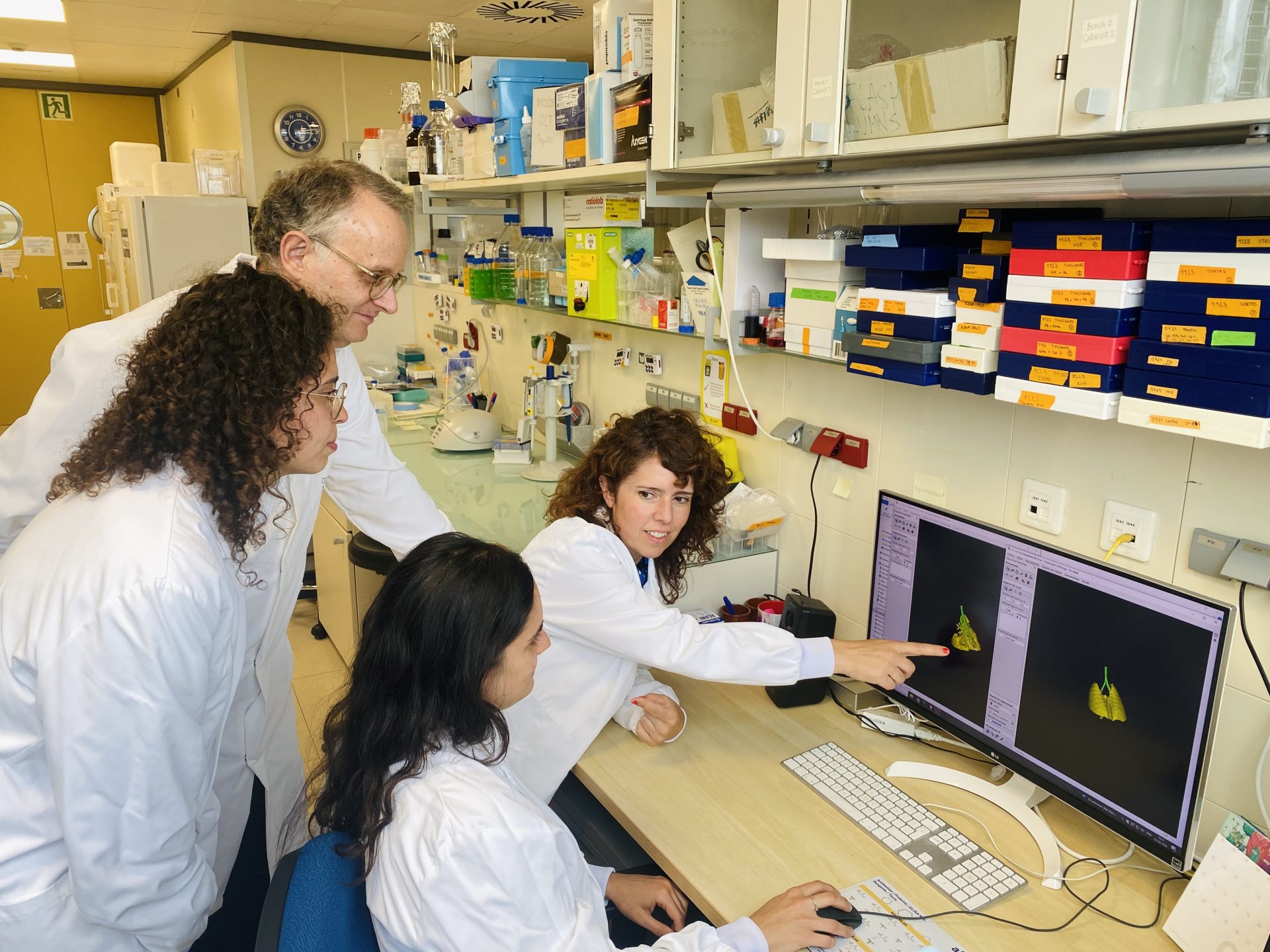
A CIC biomaGUNE team has succeeded in retaining 90% of an antifibrotic nanomedicine in the lungs, thereby reducing its side effects in mice.
The synthesis method used is simple, automated and reproducible, and opens up new avenues for drug encapsulation and its use in pulmonary therapy via inhalation.
The Biomaterials Research Cooperative Centre CIC biomaGUNE has developed pulmonary surfactant nanoparticles (the mixture of lipids and proteins that coats the alveoli and enables breathing) encapsulating a drug used to treat pulmonary fibrosis. These nanoparticles have demonstrated a strong capacity to remain retained in diseased tissue after being administered via the pulmonary route. This enables a reduction in antifibrotic drug dosages and, consequently, a decrease in the potential side effects associated with conventional therapies. Tests carried out in mice show a therapeutic effect in pulmonary fibrosis.
The study, published in the journal Advanced Healthcare Materials by the Molecular and Functional Biomarkers group at CIC biomaGUNE, presents a simple, automated and reproducible synthesis method that ensures effective drug encapsulation, an appropriate size distribution, and high stability through microfluidics—a technique that enables highly precise manipulation of fluids at the microscale.
Pulmonary fibrosis is a relatively common chronic disease in which lung tissue develops scars in an uncontrolled and progressive manner. The most common risk factors include smoking, occupational exposure to dust and chemicals, exposure to drugs such as chemotherapy or radiotherapy, and viral diseases such as COVID-19. This thickened and stiff tissue hinders proper lung function, progressively making breathing more difficult. Conventional treatment for pulmonary fibrosis (administered orally) frequently causes adverse effects, which is why there is significant interest in improving it.
Although drug delivery via inhalation allows for targeted treatment of the lungs, its clinical efficacy is often limited by inflammation, heterogeneous distribution and physiological barriers. “To reduce the side effects caused by medicines used to treat pulmonary fibrosis, the best approach is to direct them specifically to the diseased tissue,” explains Dr Susana Carregal, Ikerbasque Research Associate. “Inhaled administration is a very direct way of delivering medicines to the lungs. However, as the lungs are designed to protect themselves from pathogens entering through breathing, the very mechanisms that help defend our body also make this type of inhalation-based delivery more challenging.”
The power of biomimicry
Currently, extensive research is focused on enabling these types of therapies to function effectively by finding ways to evade the immune system—that is, ensuring that the lungs do not identify drugs as pathogens or foreign substances so that they can reach their target. In this regard, the research team led by Dr Carregal has developed a biomimetic platform based on pulmonary surfactant nanoparticles “that preserves the native proteins and lipids of the surfactant and its biophysical functionality, thereby improving pulmonary delivery,” states Dr Carregal, principal investigator of the study.
“The lungs are filled with pulmonary surfactant; it is the interface where gas and liquid exchange takes place,” she explains. “Encapsulating drugs aimed at treating lung diseases within pulmonary surfactant can improve their distribution throughout the lungs due to its surface properties. In other words, using an endogenous material can help ensure that, when administered via inhalation, the drug is more effectively distributed within the lungs.”
The CIC biomaGUNE research team has demonstrated in mouse models that “90% of the administered nanomedicine remains retained in the lungs. The retention level is very high, which means that, with this treatment, the amount of drug reaching the liver is much lower than with conventional treatments, thereby reducing side effects,” notes Carregal. It is important for a drug to act only where it is needed, in order to reduce both the administered dose and associated side effects.
The synthesis method developed at CIC biomaGUNE may help advance the use of inhaled medicines. “The synthesis of these nanoparticles is highly simplified and may support product standardisation, as it generates materials or nanomedicines with tightly controlled size and direct drug encapsulation. It is a highly homogeneous and reproducible system. This opens up new pathways for the development of inhalation-based treatments for lung diseases,” she adds.
This study, carried out by the research group led by Ikerbasque Professor Jesús Ruiz-Cabello, involved collaboration with the team from the Department of Biochemistry and Molecular Biology, led by Professor Jesús Pérez Gil at the Complutense University of Madrid.