TECNALIA has developed and patented a reactor to increase biomethane production
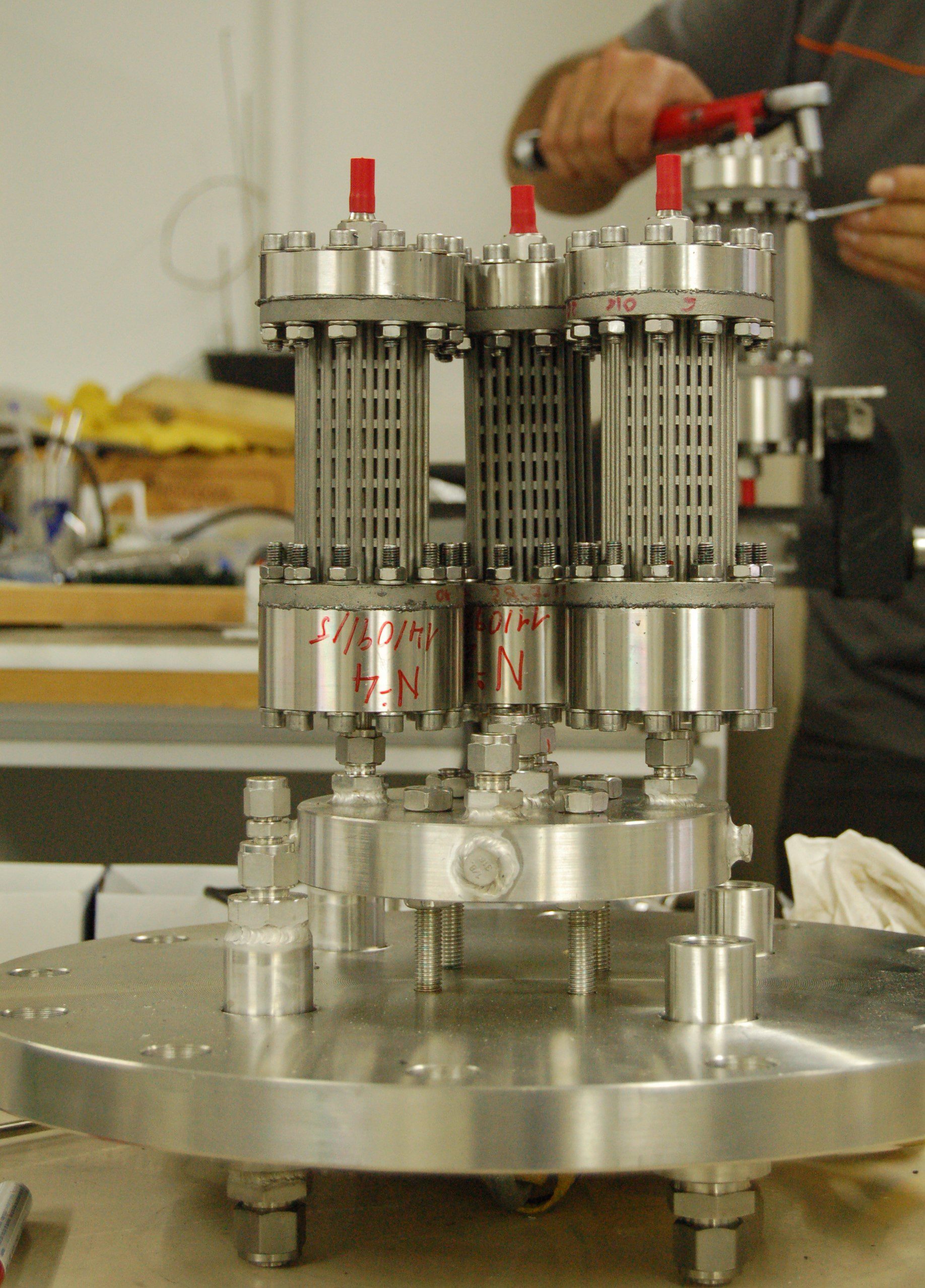
The multi-channel reactor has already been successfully tested in a pilot plant using actual biogas from a sewage treatment plant, demonstrating that the technology works under near-industrial conditions
This technology, adaptable to any industrial facility, positions TECNALIA as one of the few European centres capable of offering advanced solutions that enhance the competitiveness of biomethane and synthetic natural gas
These energy carriers are fully compatible with the natural gas network and have become key renewable gases for decarbonising sectors that are difficult to electrify
The applied research and technological development centre TECNALIA has developed and patented a multi-channel reactor that enables synthetic natural gas to be obtained directly from biogas through the conversion of the CO₂ it contains. Thanks to this system, the overall efficiency of the upgrading process is improved, achieving an outlet methane concentration of over 95% in a single step.
This technology positions TECNALIA as one of the few European centres capable of offering advanced solutions for the utilisation of CO₂ from biogas, increasing the methane content of the final gas and strengthening the competitiveness of synthetic natural gas as a renewable fuel that is fully compatible with the grid.
This reactor, designed to intensify the methanation reaction of the CO₂ present in biogas, is based on a millimetre-scale architecture that provides heat and mass transfer coefficients far superior to those of conventional reactors, preventing the formation of hot spots and allowing stable operation even under dynamic conditions. Furthermore, its modular design facilitates scaling through replication, making it a solution adaptable to both small-scale plants and industrial facilities.
The reactor has been validated in a pilot plant at TRL6, which measures its technological maturity, demonstrating high efficiency, a rapid response to flow variations and almost total utilisation of the feedstock, successfully producing synthetic natural gas of sufficient quality to be injected directly into the natural gas network.
TECNALIA has demonstrated the reactor’s viability through collaboration with companies such as Lointek, Repsol, Petronor, and Awaes (Tedagua).
Key energy carriers
Both biomethane and synthetic natural gas have established themselves as key energy carriers for advancing the decarbonisation of sectors that are difficult to electrify, such as industry, heavy transport and process heat. Their ability to integrate directly into existing gas infrastructure makes them an immediate and scalable solution within the energy transition.
It is estimated that by 2030, Spain will reach a production potential of up to 137 TWh per year, equivalent to 40% of the country’s current natural gas consumption, positioning biomethane as a strategic means of reducing energy dependence and strengthening energy security whilst cutting emissions.
The production of biomethane and/or synthetic natural gas from agricultural, livestock, urban or industrial waste enables waste streams to be converted into a renewable gas that is fully compatible with existing infrastructure, thereby contributing to the circular economy, rural development and energy self-sufficiency. Furthermore, its manageability makes it a highly attractive complement to renewable electricity, bringing flexibility to the energy system. Indeed, initiatives such as REPowerEU have set ambitious targets to accelerate its deployment, recognising its role in energy self-sufficiency and emissions reduction.