Basque Health Cluster brings together the Basque health ecosystem to analyse the strategic opportunities of Deep Tech and the life sciences
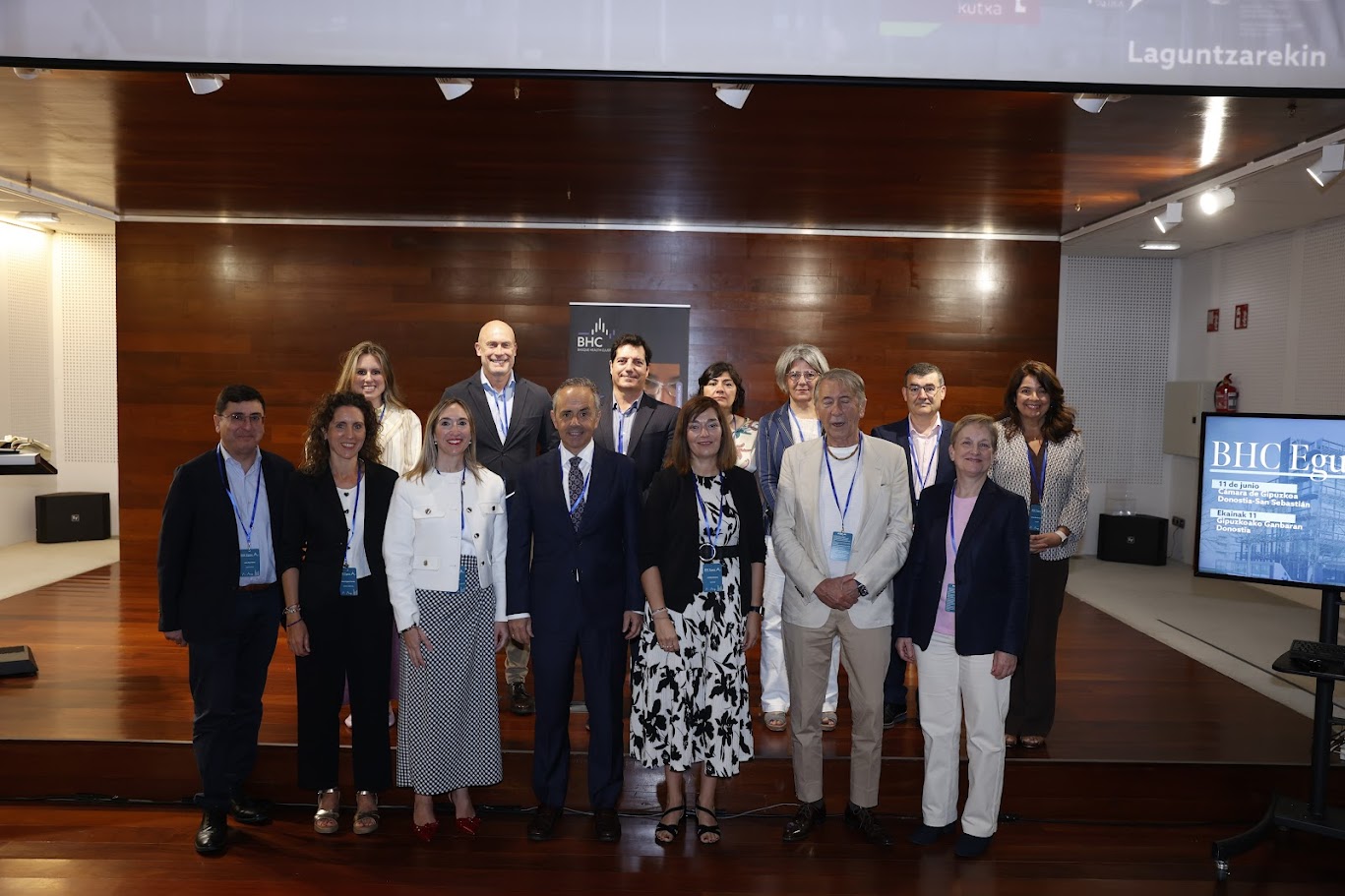
BHC Eguna 2026 gathers companies, scientific and technological stakeholders, institutions and professionals to reflect on the future of biosciences and health in the Basque Country
Basque Health Cluster has held a new edition of BHC Eguna, the leading annual meeting of the biosciences and health sector in the Basque Country, bringing together companies, technology centres, healthcare organisations, universities, institutions and professionals from the Basque health ecosystem.
The event provided a platform to analyse the main challenges and opportunities that will shape the future of the sector, with a particular focus on innovation, collaboration, competitiveness and the international positioning of the Basque Country in the field of biosciences and health.
The gathering began with the General Assembly of Basque Health Cluster, an exclusive session for member organisations in which a review of 2025 was presented. During the session, the Board of Directors of Basque Health Cluster was renewed.
The session also highlighted the growth and consolidation of the Cluster, which continues to strengthen its role as a driving force for collaboration, innovation and competitiveness within the sector.
Collaboration as a competitive advantage
The institutional opening featured contributions from Idoia Muñoz, Managing Director of Basque Health Cluster; Asier Albizu, President of the Cluster and CEO of Biolan; and Aritz Uriarte Fuertes, Deputy Minister for Healthcare Administration and Financing of the Basque Government.
In her address, Idoia Muñoz highlighted the evolution of the Basque bioscience ecosystem and the role of clusters as key instruments for enhancing business competitiveness.
Muñoz stated that “competitiveness is not built by selecting winners, but by strengthening ecosystems”, arguing that current challenges related to strategic autonomy, technological sovereignty, talent attraction and market access require “collaboration, alliances and collective intelligence”.
She also underlined that the biosciences and health sector already represents an economic and industrial reality for the Basque Country and emphasised the role of small and medium-sized enterprises within the ecosystem, stating that “supporting our SMEs is not a matter of size, but a matter of country vision”.
The Managing Director of Basque Health Cluster also called for biosciences and health to be placed at the centre of the Basque Country’s future strategies, noting that “health means industry, skilled employment, innovation, exports, investment attraction and competitiveness”, as well as contributing to social wellbeing and progress.
For his part, Asier Albizu stressed the importance of continuing to strengthen the Basque health ecosystem through collaboration between companies, the healthcare system, knowledge centres and institutions. The President of Basque Health Cluster argued that the Basque Country has the necessary assets to consolidate its position as a benchmark in healthcare innovation thanks to its scientific, technological and industrial capabilities, and highlighted the importance of leveraging close collaboration with the Department of Health to address sector challenges.
Albizu also pointed to the need to maintain and reinforce specific support measures for healthcare technologies, particularly those linked to clinical validation and evidence generation, which he described as “key levers for shortening the gap between innovation and its real application within the healthcare system”. He also called for progress towards a framework that facilitates access to and secondary use of clinical data by companies, generating value both for the business fabric and the healthcare system itself.
He further advocated for the promotion of strategic public procurement that fosters local innovation, strengthens the Basque Country’s strategic autonomy and maximises the economic, technological and social return on healthcare investments. In this regard, he highlighted the role of associations and clusters as instruments for structuring collaboration among stakeholders and transforming existing capabilities into projects with a tangible impact on society.
Aritz Uriarte Fuertes emphasised the strength of the Basque health ecosystem and the role played by Basque Health Cluster as a space for collaboration among companies, technology centres, universities, healthcare organisations and institutions. The Deputy Minister stressed that health constitutes one of the strategic pillars for the wellbeing and competitiveness of the Basque Country, also aligned with European priorities in innovation and development.
Uriarte highlighted the importance of further advancing public-private and inter-institutional collaboration to address the major challenges facing the sector, pointing to initiatives such as the Basque Health Pact as examples of collective efforts aimed at strengthening the healthcare system. He also underscored the capabilities already present in the Basque Country in areas such as artificial intelligence, personalised medicine and advanced therapies, which are expected to transform healthcare in the coming years.
During his speech, he also referred to the potential of intelligent and secure management of health data, capable of generating benefits for patients, professionals, the healthcare system and the business sector. Finally, he encouraged continued efforts to promote spaces for dialogue and cooperation that enable the development of shared projects and reinforce the Basque Country’s position as a European benchmark in health, innovation and technological development.