CIC energiGUNE develops a technology that opens the door to oil-free shock absorbers
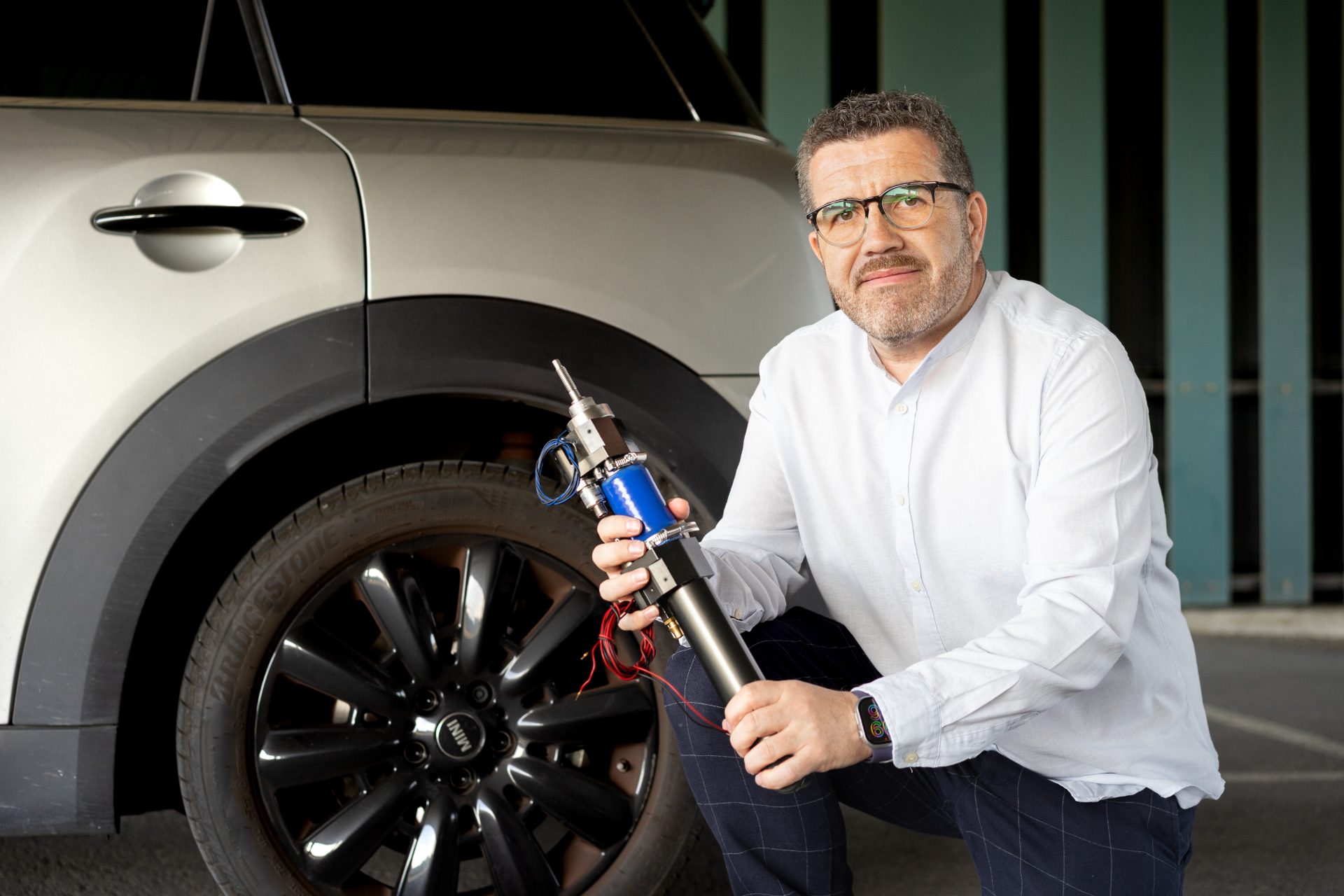
The technology, developed the European Electro-Intrusion project, has already demonstrated that it can use up to 2.6 times less oil than conventional hydraulic systems.
CIC energiGUNE is now coordinating a BOOST project to validate its industrial, environmental and economic feasibility before progressing towards future industrialisation and scale-up.
CIC energiGUNE, a leading Basque research centre in electrochemical and thermal energy storage and conversion, is spearheading a new European project aimed at accelerating the industrial validation of a damping technology with the potential to drastically reduce oil usage in hydraulic systems.
This initiative builds on the results of the European Electro-Intrusion project, funded under the Horizon 2020 programme (GA 101017858), in which a functional prototype of a regenerative shock absorber based on intrusion–extrusion phenomena in nanoporous materials was developed. This technology enables the use of water or aqueous solutions instead of large quantities of hydraulic oil, thereby opening up new opportunities for more sustainable and efficient damping systems.
The prototype validated during the project has already demonstrated that it can use 2.6 times less oil than conventional commercial solutions, a result that has attracted interest from industrial stakeholders in the automotive and suspension systems sectors.
The new project, funded through the BOOST programme (BOOS_08_02), will now focus on assessing the industrial scalability, environmental impact, economic viability, and market potential of this technology. The objective is to generate the analytical foundation required for a future EIC Transition proposal aimed at increasing its technological maturity level.
“We are at a crucial moment to turn a highly promising scientific demonstration into a genuine industrial opportunity,” explains Yaroslav Grosu, Group Leader at CIC energiGUNE and coordinator of the Electro-Intrusion project. “The technology has shown that it is possible to rethink traditional hydraulic systems through the use of nanoporous materials and alternative fluids, with enormous potential in terms of sustainability and efficiency.”
Over a six-month period, the project will address activities including technological assessment, life cycle analysis (LCA), life cycle cost analysis (LCC), and business development. These tasks will help determine whether the technology can offer real competitive advantages over conventional hydraulic systems.
“Industry needs solutions that are not only technologically advanced, but also viable from an economic, environmental and industrial perspective,” notes Luis Ángel Bartolomé, Senior Researcher at CIC energiGUNE. “This project will help us identify the most promising configurations and define the conditions required to move towards future industrialisation.”
In addition to the technological evaluation, the project will analyse different scenarios for progressively reducing oil usage, including potentially oil-free configurations. In each case, their environmental impact and economic competitiveness under representative operating conditions will be assessed.
The initiative brings together a multidisciplinary team with expertise in advanced materials, tribology, sustainability, techno-economic analysis, and industrial strategy. Through this work, CIC energiGUNE further strengthens its position as one of Europe’s leading centres in advanced energy technologies and technology transfer to industry.