Laboratory-designed proteins, a promising treatment for liver disease
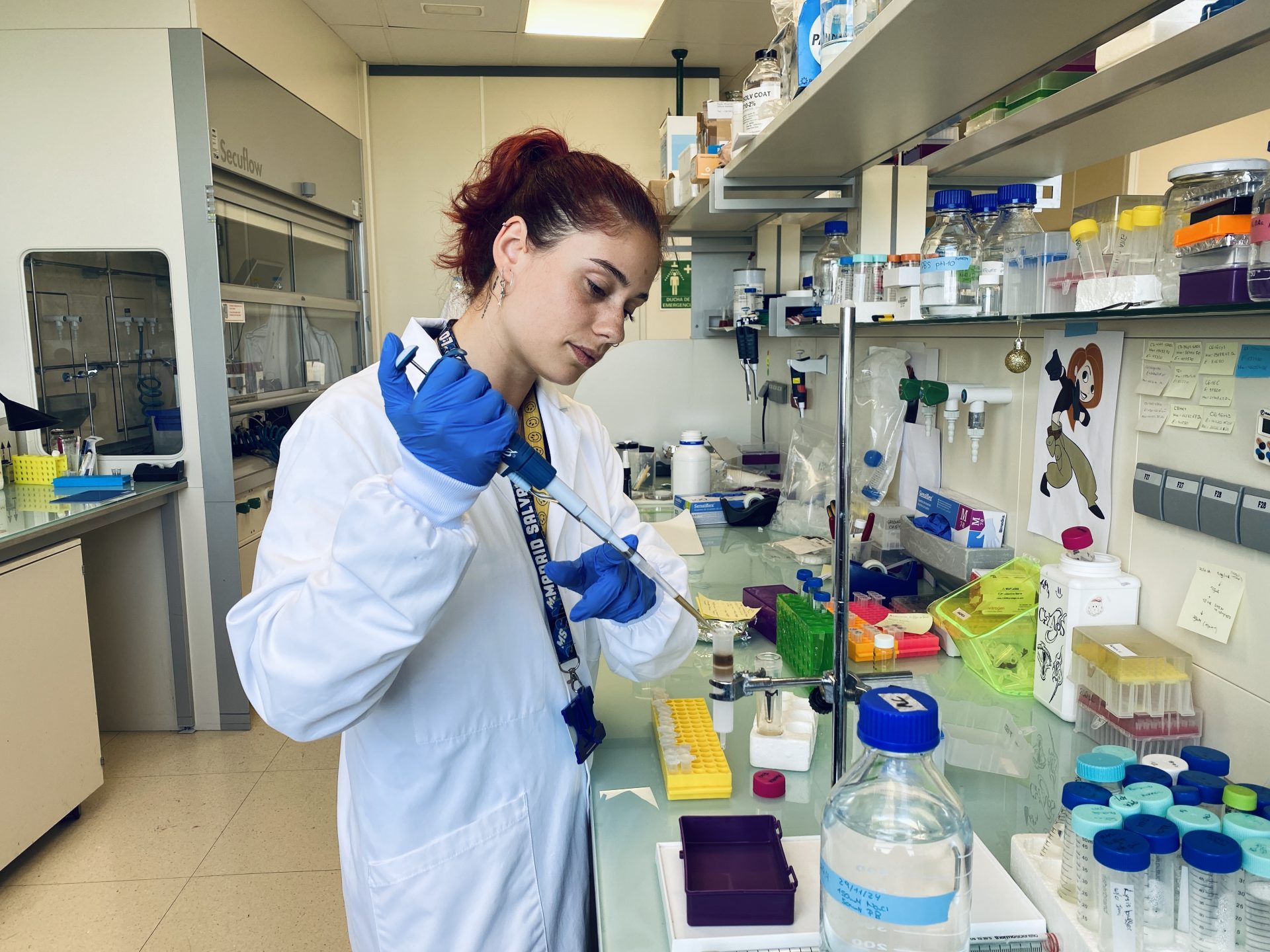
The team led by Aitziber L. Cortajarena has succeeded in reducing liver fibrosis and hepatocellular carcinoma in mice
This study by CIC biomaGUNE paves the way for the development of protein-based agents for therapy and diagnosis
The research group led by CIC biomaGUNE Ikerbasque Professor Aitziber L. Cortajarena has developed an innovative antifibrotic and antitumour treatment through the combination of a synthetic protein and gold nanoclusters (small aggregates of around six gold atoms). The study, carried out in collaboration with the group led by Dr Ana Beloqui at the Catholic University of Louvain (Belgium), has demonstrated that this hybrid formulation shows strong liver specificity and minimal side effects in mice.
Liver diseases can evolve from reversible inflammation to chronic conditions such as liver fibrosis and liver cancer. Fibrosis is characterised by the progressive accumulation of scar tissue at an early stage, ultimately leading to tumour development and liver failure in advanced stages. According to the WHO, 830,000 deaths from hepatocellular carcinoma were recorded worldwide in 2020. In addition, it is estimated that around 3.3% of the global population suffers from advanced liver fibrosis.
In recent years, considerable efforts have been devoted to developing therapeutic strategies aimed at blocking the function of the Hsp90 protein, due to its central role in fibrosis and cancer progression. Synthetic protein molecules have emerged as an attractive alternative, as they can be rationally designed to recognise specific targets and optimise their therapeutic activity.
In this respect, the hybrid material developed by CIC biomaGUNE’s Biomolecular Nanotechnology group — together with the Louvain Drug Research Institute, Advanced Drug Delivery and Biomaterials group — has been designed to bind to the Hsp90 protein, in a manner similar to a key fitting into a lock: “This blocks the processes that trigger the disease, as this protein is overexpressed in diseased livers,” explains Dr Cortajarena, Scientific Director of CIC biomaGUNE. “The study results show that the compound developed is a promising next-generation therapy, eliciting a low immune response and demonstrating high therapeutic potential.”
In the case of liver fibrosis, the treatment developed reduces liver damage. The team confirmed a reduced presence of molecules that activate the disease, as well as a decrease in accumulated collagen fibres. In other words, the machinery that generates scarring is slowed down while damaged tissue is eliminated.
In the case of liver cancer, the results are equally promising: blocking the Hsp90 protein results in a reduction of the proteins that enable cancer cells to divide uncontrollably. Through this biological “braking”, the research team was able to significantly reduce both the number and size of tumours, an advance confirmed using various imaging techniques and molecular analyses.
For therapy, monitoring and diagnosis
For its part, the presence of the gold nanocluster made it possible to “detect the distribution of the drug in the mouse, enabling us to investigate in which organs it accumulated — key information for understanding its behaviour in the body and, therefore, for the development of effective drugs,” states Gabriela Guedes, one of the researchers involved in the study.
“It is important to highlight that the versatility of these designed proteins opens up the possibility of adapting the metallic component to the desired imaging technique,” says Cortajarena. The protein structure can be designed to bind not only to gold but also stably to other metals such as gadolinium or iron, which provides the therapeutic system with the capacity for monitoring through different imaging and diagnostic techniques. For example, “binding iron-based nanostructures to the designed protein would allow treatment monitoring in real time using magnetic resonance imaging, without the need to administer an additional contrast agent,” adds the Ikerbasque Professor.
This study provides evidence not only of the potential of designed proteins as antifibrotic and antitumour agents, but also of their versatility to be developed as theranostic agents — that is, combining both therapeutic and diagnostic functions. These findings open up countless opportunities to improve treatment and patient outcomes: “Our results offer new possibilities for developing therapies based on this type of protein,” conclude the researchers.