GAIKER Collaborates in Research for the Recovery of Critical and Strategic Raw Materials
The SERVET project will develop a new circular value chain for the recovery of critical and strategic raw materials contained in complex waste streams
GAIKER Technology Centre, a member of Basque Research & Technology Alliance (BRTA), is taking part in the SERVET project (Research into New Circular Economy Processes in Support of Strategic Sovereignty), which aims to design a new circular, efficient, sustainable and technologically advanced value chain for the selective recovery of critical and strategic raw materials contained in complex waste streams.
The project will investigate the valorisation of various post-consumer and industrial waste streams, including photovoltaic and hybrid panels, printed circuit boards (PCBs), industrial metal-bearing fractions and other complex solid waste. From these streams, solutions will be developed to recover critical raw materials such as copper, silicon, tantalum and niobium, as well as other high-value metals such as silver and tin.
The growing demand for essential raw materials in strategic sectors such as renewable energy, digitalisation, automotive manufacturing and the electronics industry poses significant challenges for European industry. Dependence on external resources and the need to secure supply chains make it essential to promote more circular models capable of recovering high-value materials contained in waste. In this context, SERVET has emerged as a project funded by the Spanish Centre for the Development of Industrial Technology (CDTI) and supported by the Ministry of Science, Innovation and Universities under the Misiones 2025 programme.
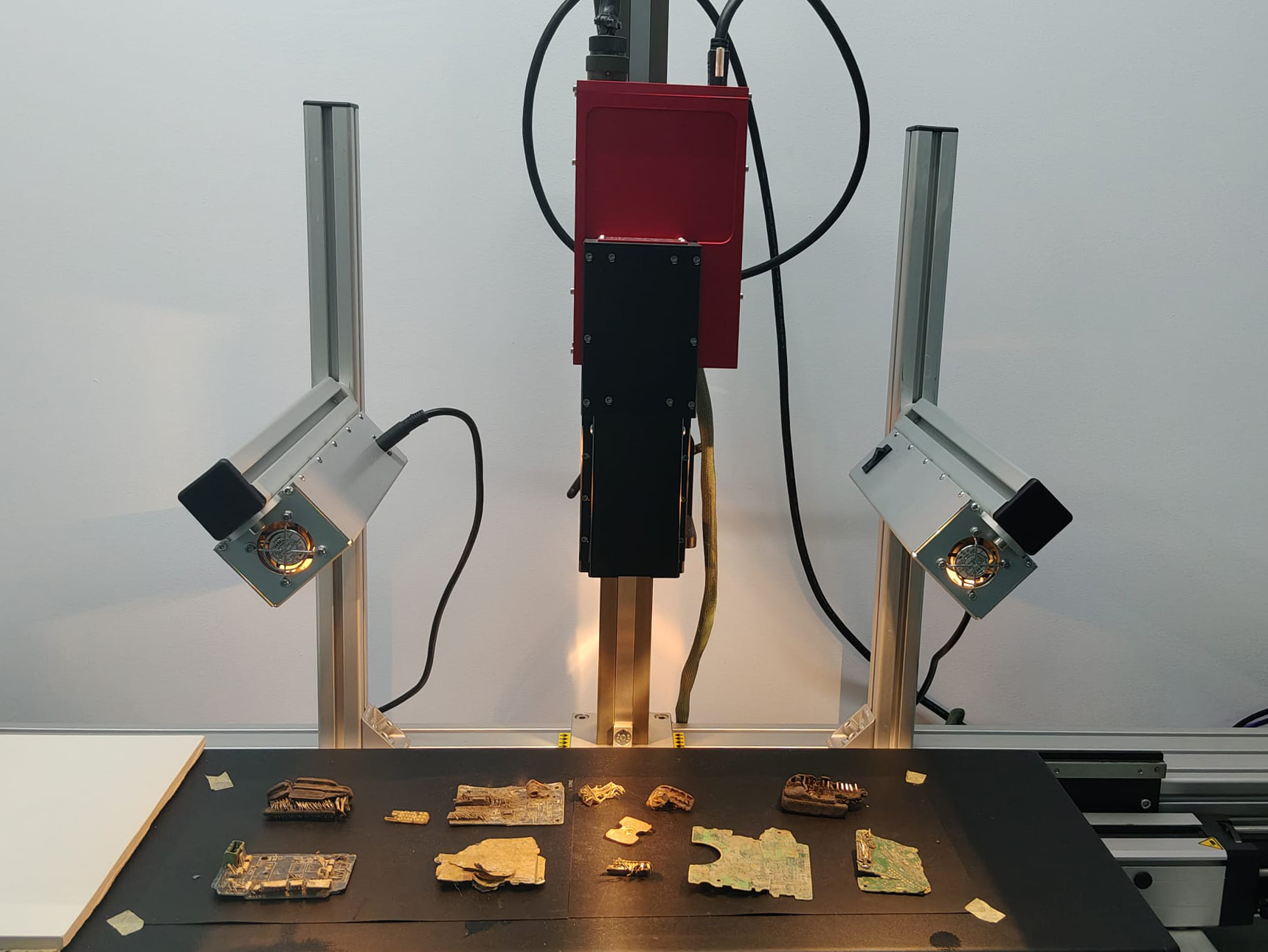
The project is led by Tradebe Environmental Services through its end-of-life vehicle (ELV) and metal recycling facilities, and involves eight additional companies: LENZ, Técnicas Reunidas, Atlantic Copper, Abora, Lurederra, INM, Eurecat and Cenim. SERVET adopts a systemic and interdisciplinary approach that combines advanced technologies for material pre-treatment, conditioning and automated separation with innovative extraction and purification processes that are highly selective, efficient and sustainable. It also incorporates online analysis and monitoring techniques based on advanced optical technologies such as RGB machine vision, hyperspectral imaging (HSI), LIBS spectroscopy, NIR spectroscopy and Raman spectroscopy, integrated with artificial intelligence algorithms.
The project strategy is completed through the reintroduction of recovered materials into new high value-added industrial applications, promoting a fully integrated circular model. Potential applications include the manufacture of new solar panels and functional conductive inks, contributing to more efficient resource management, reducing dependence on imported raw materials and minimising environmental impact.
GAIKER’s Contribution
As a specialist in the development of material identification and automated separation technologies, GAIKER will contribute to the research of advanced new strategies for the identification, classification and selective separation of complex waste streams.
To this end, the Technology Centre will develop and apply advanced characterisation and identification technologies based on machine vision (RGB imaging), hyperspectral imaging (HSI), LIBS spectroscopy and Raman spectroscopy, integrated with artificial intelligence algorithms and intelligent sorting systems. These solutions will enable the optimisation of the detection, characterisation, automated separation and pre-concentration of materials of interest for subsequent recovery.
In addition, GAIKER will investigate selective pre-treatment processes, advanced analytical techniques for the online monitoring and characterisation of materials, as well as physical, chemical and thermomechanical methods for obtaining solar-grade silicon and recovering metals. Finally, it will assess the performance, scalability and technical feasibility of recovering critical raw materials and their subsequent valorisation in new industrial applications.