Gipuzkoa becomes a testing ground for low-emission KM0 eggs
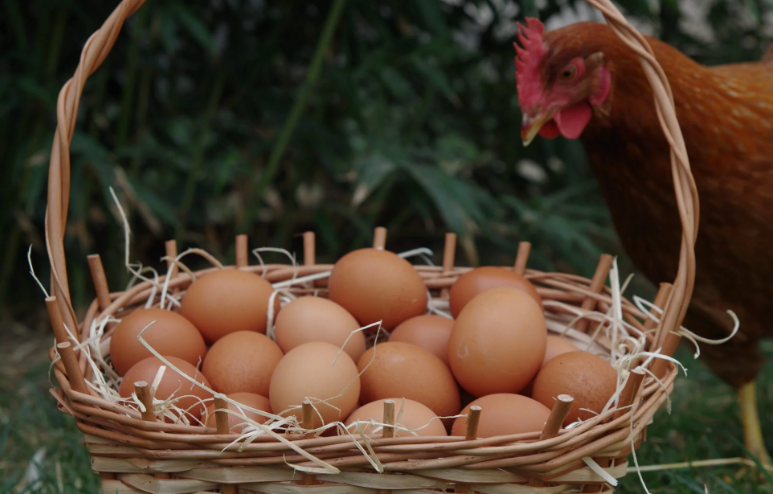
The Basque Centre for Climate Change (BC3) research centre, the Euskaber cooperative and Eroski are collaborating on KABI, an innovation project aimed at reducing the carbon footprint of poultry production.
Funded by the Provincial Council of Gipuzkoa, the initiative focuses on improving the sustainability of hen feed through alternatives based on circular economy principles.
The Basque Centre for Climate Change (BC3) research centre, the Euskaber cooperative, dedicated to the production and marketing of local eggs from free-range and organic hens, and Eroski have launched an innovation project in Gipuzkoa aimed at producing low-emission KM0 eggs.
The initiative, known as KABI (Arrautza jasangarriaren bertako bidea), seeks to advance towards a more sustainable egg production model by integrating climate change mitigation, the circular economy, the use of locally sourced resources and the strengthening of local value chains.
In particular, the project focuses on the composition and origin of the raw materials used in poultry feed, especially protein sources, due to both their contribution to the carbon footprint and the sector’s dependence on external resources.
“Feed for laying hens is one of the main factors contributing to the carbon footprint of egg production. Its impact depends not only on the composition of the feed but also on the origin of the raw materials, their production processes and transportation. Our preliminary analysis has identified animal feed, particularly the protein component of feed, namely soya, as one of the areas with the greatest potential for environmental improvement,” explains Inma Batalla, researcher at BC3.
The objective of KABI is not to eliminate soya completely from poultry feed, but rather to explore its partial replacement through combinations of alternative raw materials, preferably locally sourced resources and agri-food by-products, with the potential to reduce the carbon footprint by at least 15%, while ensuring nutritional adequacy, product quality and the technical and economic viability of farms.
BC3 provides the scientific and methodological expertise required to assess the environmental impact of the proposed solutions and determine their real potential for reducing emissions. In addition, it will study the conditions needed to extend these solutions to other farms and contribute to strengthening local production.
Consumer analysis
In addition to its production and environmental dimensions, KABI will also focus on consumers. According to data from the Household Consumption Survey conducted by Spain’s Ministry of Agriculture, Fisheries and Food (MAPA), egg consumption in Basque households has increased in recent years, rising from 10.49 kg per person in 2021 to 11.73 kg in 2025.
Eroski will lead an analysis of how different types of eggs are perceived and which attributes consumers associate with local origin, sustainability, animal welfare, emissions reduction, price and quality. The aim is to identify barriers to understanding and generate insights that help communicate more clearly in supermarkets the value of locally produced and sustainable eggs.
KABI emerged from the relationships and collaborative working dynamics fostered within the Basque Hub of the European SWITCH project, coordinated by BC3, which has brought together stakeholders from production, distribution and research to identify shared challenges and develop new initiatives.
“Our previous experience highlights the potential of participatory and multi-actor approaches to transform shared knowledge into innovation projects, connecting scientific research with the needs of the region and contributing to a more sustainable, circular, competitive and locally rooted food system,” says Inma Batalla.
The KABI initiative is funded by the Provincial Council of Gipuzkoa under the Etorkizuna Eraikiz Misioak 2026 programme.