Repairing Myelin: A New Approach in the Fight Against Alzheimer’s Disease
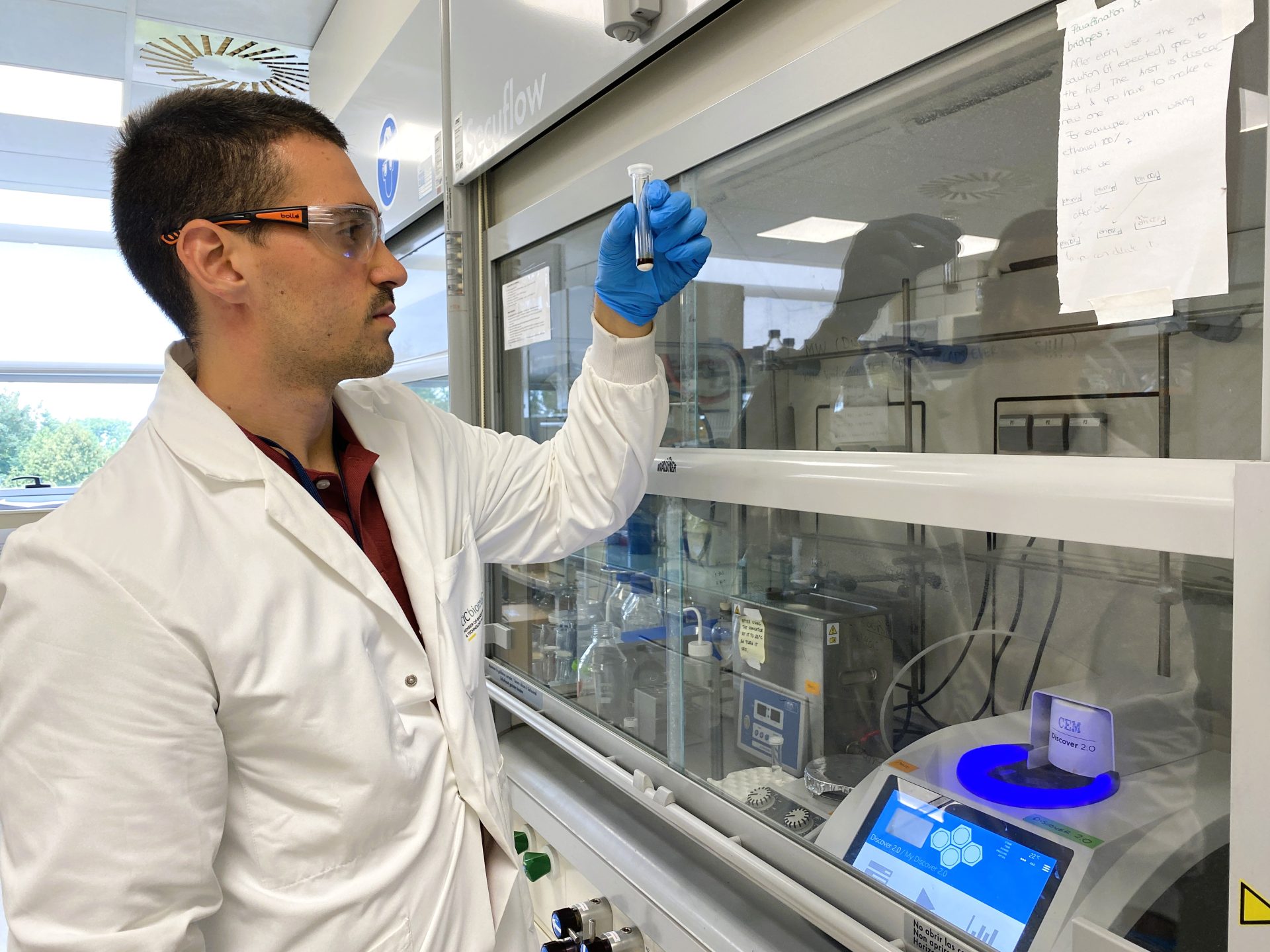
The research group led by Dr Jordi Llop at CIC biomaGUNE is investigating Alzheimer’s disease from a different perspective than is usually taken: focusing on myelin, the protective sheath that surrounds neuronal extensions and enables nerve impulses to be transmitted efficiently.
A better understanding of the role of myelin is opening up new possibilities for early detection, disease monitoring and the development of novel therapeutic strategies.
For decades, Alzheimer’s research has focused on two main players: a protein fragment known as beta-amyloid, which accumulates in the space between neurons in people with Alzheimer’s disease, and the tau protein, which builds up inside neurons in affected individuals. However, there is growing evidence that these two pieces of the puzzle are not sufficient to fully explain the disease.
Various studies have suggested that myelin, the insulating layer that enables rapid communication between neurons, may be affected in the early stages of Alzheimer’s disease, even before symptoms become apparent.
“In recent years there has been a shift in perspective, and increasing emphasis has been placed on the possible role that myelin degradation may play in disease progression. It is believed that these changes in myelin occur at very early stages of the disease,” explains Dr Jordi Llop of CIC biomaGUNE. “In people with Alzheimer’s disease, myelin is degraded and altered in some way, although it remains unclear whether this is a cause or a consequence of the disease.”
With this in mind, the Radiochemistry and Nuclear Imaging Group at CIC biomaGUNE, led by Dr Llop and working in collaboration with the group of Professor Carlos Matute (UPV/EHU), is seeking ways to repair or prevent alterations to myelin as a strategy for treating Alzheimer’s disease.
“The ultimate goal of our project is to investigate whether there are compounds capable of helping to restore myelin in our Alzheimer’s mouse model, and whether this eventually translates into cognitive improvement,” adds Dr Llop.
Making the Invisible Visible
Changes in myelin are not easy to detect. Although brain imaging techniques make it possible to observe the brain without surgery, they do not always identify subtle alterations in myelin, meaning that much of this degeneration may remain hidden.
CIC biomaGUNE has access to a new generation of tools that make it possible to “see in real time whether myelin sheaths can actually be repaired in animal models that reproduce what happens throughout the course of the disease,” explains Llop. “We carry out imaging studies to observe in real time how this sheath surrounding neurons is protected, and we combine these with behavioural tests to determine whether the mice recover memory function or experience less memory loss.”
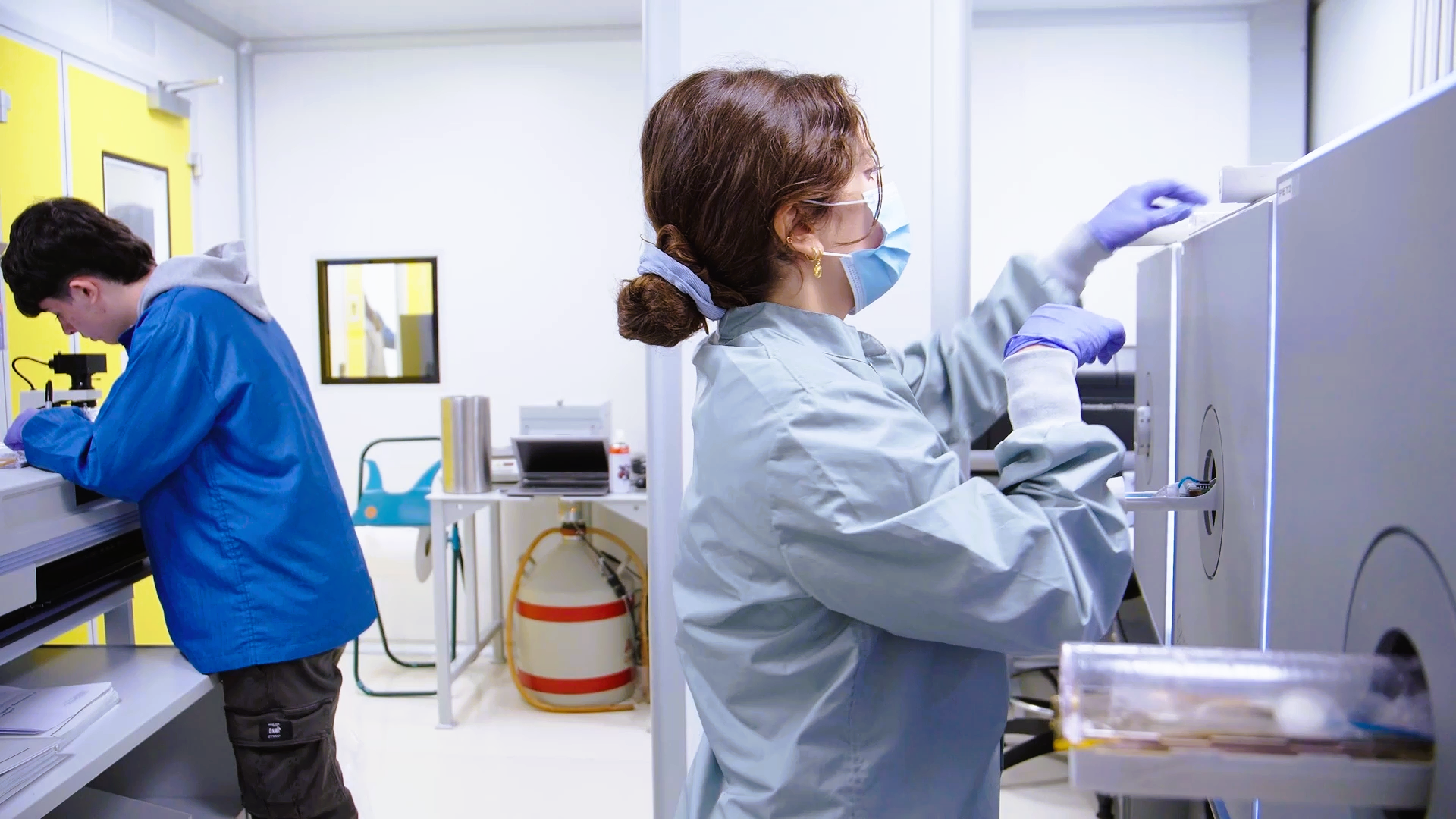
Positron Emission Tomography (PET) is an imaging technique that uses small radioactive molecules as markers. Once inside the body, these molecules travel through the brain and enable specific biological processes to be detected.
For Alzheimer’s research, “we are using a tracer capable of identifying areas where myelin is damaged. When myelin deteriorates, it exposes structures that would normally remain hidden. The tracer binds to these structures and produces a detectable signal. In a sense, it is as though the brain reveals, using invisible ink, the areas where something is beginning to go wrong,” explains Mariana Coimbra de Almeida, a predoctoral researcher in the group.
In addition, the CIC biomaGUNE team is working to automate some of the processes used to analyse the images obtained in its studies. Predoctoral researcher Sebastián Acebal is developing artificial intelligence models to achieve this.
“To understand what is happening in the brain, one of the most important aspects is knowing what is taking place in each specific region. To do this, we divide the images acquired by my colleagues and define regions of interest. This process, known as segmentation, is normally carried out manually, but it is extremely time-consuming and challenging. As part of my doctoral project, I am developing various artificial intelligence models to automate this process, as well as other software tools that will improve the results obtained,” explains Acebal.
Early Detection, Disease Monitoring and New Therapeutic Strategies
Initial studies using these tools have shown that it is possible to detect Alzheimer’s-related changes in brain regions where myelin is particularly abundant. This supports an idea that is gaining increasing recognition: Alzheimer’s disease is not only a disorder of protein accumulation, but also a disorder of connectivity.
Neurons do not function in isolation. They form complex networks, and their effectiveness depends on signals being transmitted correctly. When myelin fails, these networks begin to lose efficiency, even though the neurons themselves remain present.
The MYAMI project is seeking new treatments for Alzheimer’s disease.
“Understanding the role of myelin more fully opens up new possibilities,” says Llop. On the one hand, it could help identify Alzheimer’s disease at earlier stages, when changes are not yet clinically apparent. On the other, it could enable more accurate monitoring of disease progression.
It also opens the door to new therapeutic strategies. If part of the problem lies in the deterioration of myelin, then protecting or repairing it could become a key target in the fight against Alzheimer’s disease.