The Basque Country is leading the way in the technological and industrial development of renewable fuels in Europe, with an investment of €250 million
The fourth transformative project under the Basque Country Industry Plan 2030 will create a leading European hub for renewable fuels
This hub, based at the EIC, brings together the Basque Country’s technological capabilities to drive the development of renewable fuels. Key technologies will be developed in the fields of synthetic fuels, biofuels, CO2 and renewable hydrogen
This project is linked to the first transformative project, which will develop a new generation of renewable-fuel-powered aircraft engines
This project represents an initial investment of almost €250 million over the next three years, of which €85 million will be allocated to R&D and technological development
It involves the creation of 300 direct, highly skilled jobs, as well as 900 indirect ones. A total of 1,200 new jobs
The project, led by Petronor and supported by the Basque Government and the Provincial Council of Bizkaia, will involve 51 companies, 23 of which are SMEs, and will benefit from the collaboration of the Basque Energy Cluster
Furthermore, it will primarily involve four technology centres from the Basque Network for Science, Technology and Innovation (RVCTI)
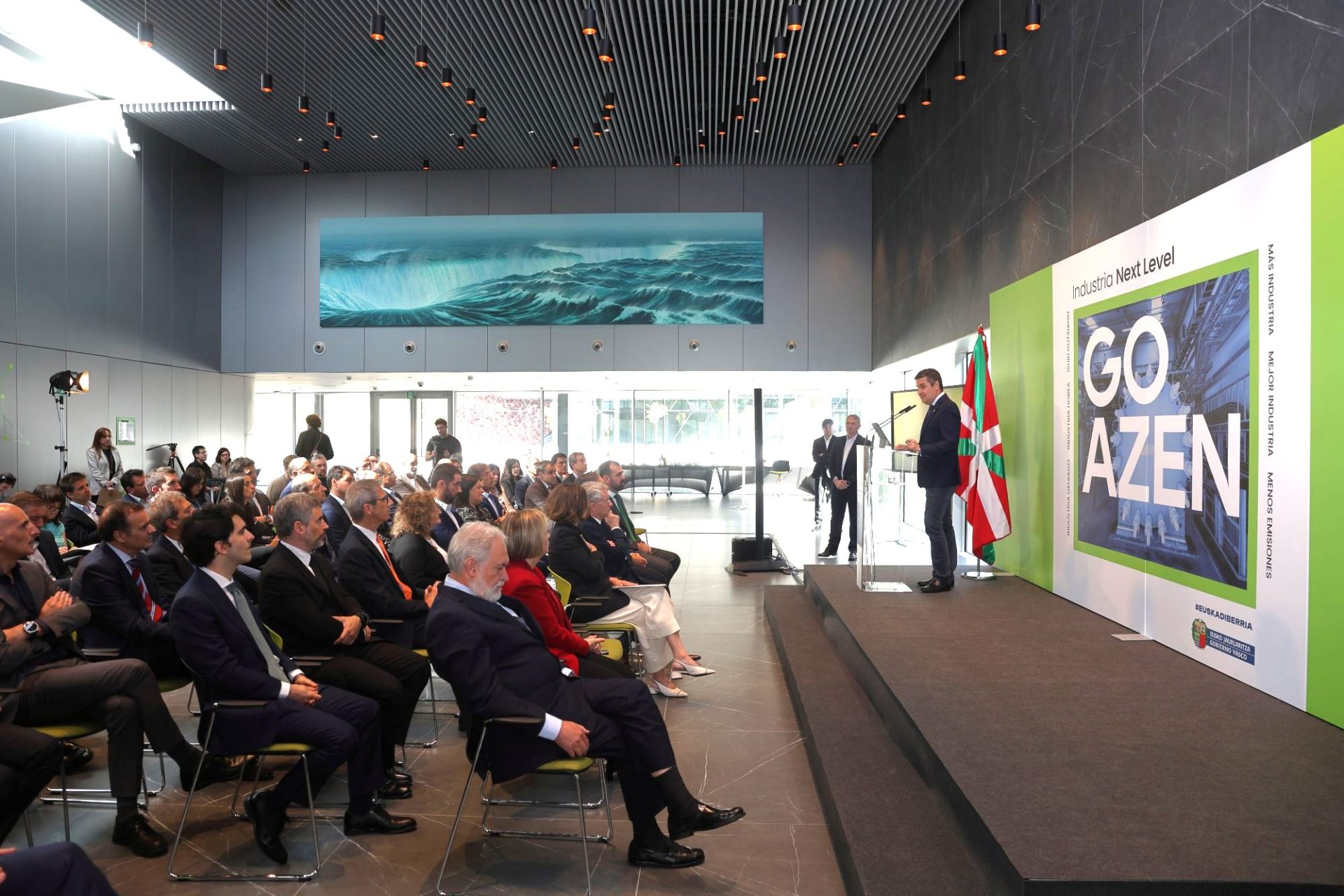
Mikel Jauregi, the Basque Government’s Minister for Industry, Energy Transition and Sustainability, has presented the ‘Renewable Fuels Hub’ Transformative Project at the Energy Intelligence Centre (EIC); this is the fourth industry-led initiative to emerge under the Euskadi-2030 Industry Plan. This project will place the Basque Country at the forefront of Europe in the technological and industrial development of renewable fuels.
This new Hub, based at the Energy Intelligence Centre (EIC) on the Abanto Campus of the Basque Country Technology Park, will bring together the Basque Country’s existing technological, industrial and scientific capabilities to drive the development of renewable fuels. Key technologies linked to synthetic fuels, advanced biofuels, and technologies associated with CO₂ and renewable hydrogen will be developed and implemented.
The project is closely linked to the first Transformative Project of the Basque Country Industry Plan 2030, aimed at developing a new generation of aircraft engines that use renewable fuels, led by ITP Aero.
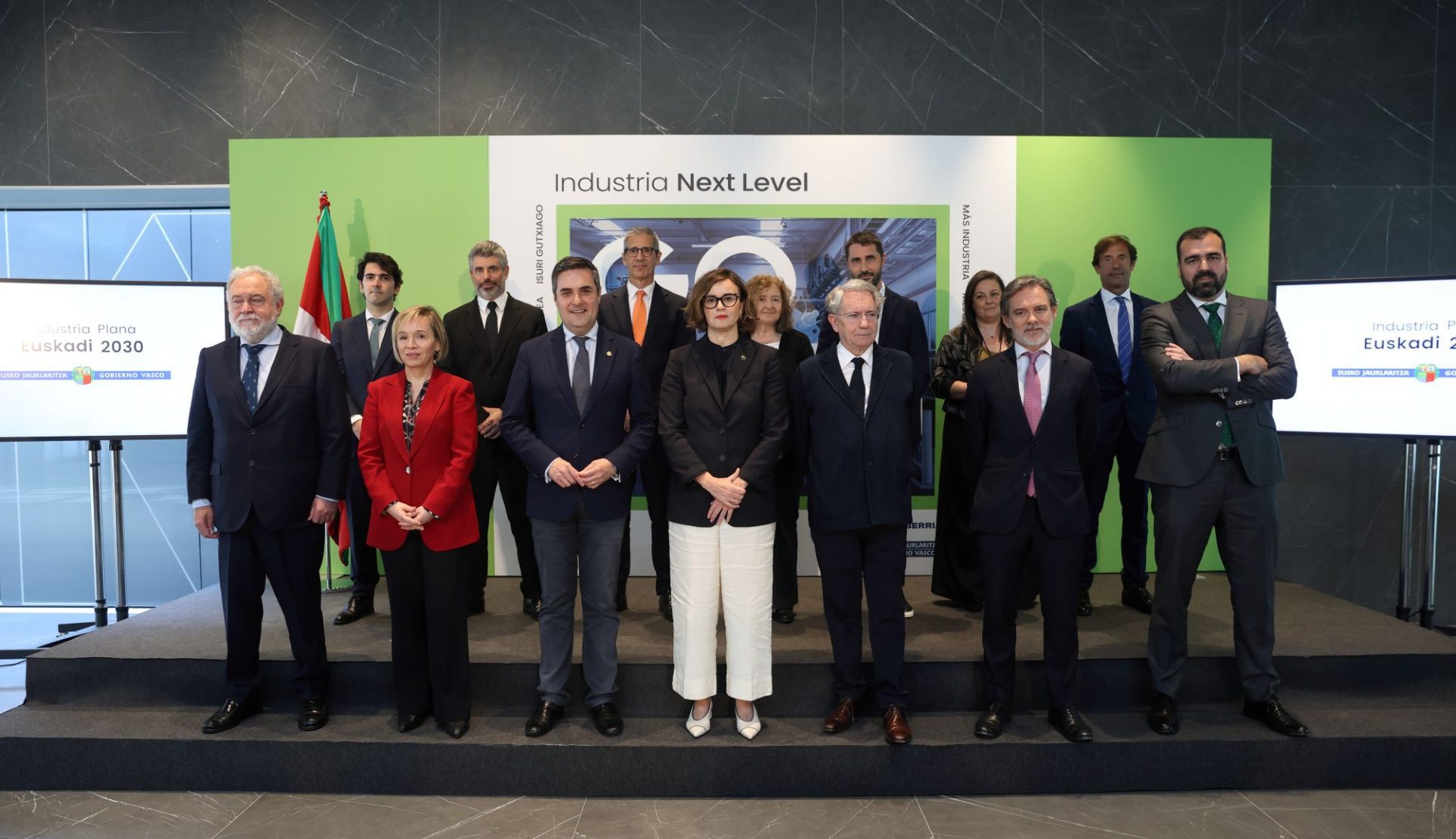
The event, attended by representatives from the companies, SMEs, technology centres and clusters participating in the project, was attended by Regional Minister Mikel Jauregi, the Deputy General of Bizkaia, Elixabete Etxanobe; the CEO of Petronor, José Ignacio Zudaire; the CEO of Nortegas, Juan Villar; and the Product Director of H2Site, Guillermo García.
Councillor Mikel Jauregi stated that “this project is the finest demonstration of the convergence of our science, technology and industry. A leading company such as Petronor and 23 SMEs are coming together in a technological development project to create a new industrial fabric”.
Jauregi emphasised that this project “is a fine example of generating new joint technological developments between transformative projects. In this case, the Renewable Fuels Hub would develop a fuel that could be used by the new aircraft engines of the first Transformative Project”.
Jose Ignacio Zudaire, CEO of Petronor, noted that “our commitment has always been to industry which, combined with technology, allows us to lead decarbonisation processes and offer solutions to all those activities that cannot do so otherwise. We also believe in collaboration between all companies, large and small, united in a value chain that benefits everyone. And we believe in public collaboration, which also provides us with a stable regulatory framework for our investments and supports our projects.”
The Deputy General of Bizkaia, Elixabete Etxanobe, has stated that “this renewable fuels hub perfectly embodies the Basque Country and Bizkaia we want to build: a region that turns a major global challenge, such as decarbonisation, into an opportunity to generate new industry, technology and quality jobs. The energy transition is about reducing emissions, but above all about strengthening our energy sovereignty, developing our own capabilities in strategic sectors and positioning ourselves as leaders in the economy of the future. At the Provincial Council of Bizkaia, particularly through the Energy Intelligence Centre, we are strategic partners in this project because we believe in a transformation that combines industrial ambition, innovation and well-being, and because we know that this is where much of the competitiveness and prosperity of the coming years will be decided.”
For his part, the CEO of Nortegas, Juan Villar, noted that “this Transformative Project does not focus solely on researching new technologies or industrial solutions, but rather aims to establish a genuine collaborative ecosystem, where companies, technology centres, universities and the public sector work together, with a common roadmap geared towards industrial demand”.
H2Site’s Product Director, Guillermo García, highlighted that “H2Site is participating in the Transformador Project, alongside Petronor, and is integrating its membrane technology into hydrogen production processes for refineries. Furthermore, it is involved in the strategic project to decarbonise ports through solutions based on hydrogen and ammonia”.
The initiative will mobilise an initial investment of around €250 million over the next three years, of which almost €85 million will be allocated to R&D and technological development, reinforcing the Basque Country’s position as a leading hub for energy and industrial innovation.
The Renewable Fuels Hub will lead to the creation of 300 direct, highly skilled jobs, to which 900 indirect jobs will be added, reaching a total of 1,200 new jobs linked to high value-added industrial and technological activities.
The project, led by Petronor and supported by the Basque Government and the Provincial Council of Bizkaia, will involve 51 companies, 23 of which are SMEs, and will benefit from the collaboration of the Basque Energy Cluster, which will play a key role in revitalising the industrial and technological ecosystem.
The Hub will also primarily involve four technology centres from the Basque Network for Science, Technology and Innovation (RVCTI), strengthening public-private collaboration and the link between knowledge, industry and the market.
Key technologies and sectors that are difficult to electrify
Renewable fuels include, for example, synthetic fuels and advanced biofuels. They also encompass associated technologies such as CO₂ capture, utilisation and storage, and renewable hydrogen, which are necessary for the production of synthetic fuels.
The Hub focuses on industrial and transport sectors where reducing emissions is particularly challenging. It therefore proposes advancing several technologies simultaneously and establishing testing and demonstration facilities to reduce risks and accelerate the transition to competitive solutions.
The Hub is conceived as a tool for aligning industrial, energy and innovation policies, in line with the Basque Country Industry Plan 2030 and the Science, Technology and Innovation Plan 2030.
Furthermore, it is underpinned by the Basque Country 2030 Renewable Fuels Technology Roadmap, which serves as a basis for identifying and prioritising projects across the entire chain: production, storage, transport, distribution and use.
Transformative Projects: €482 million in investment and 3,102 jobs
To date, four Transformative Projects have been submitted, representing an initial investment of over €482 million, of which €208 million is earmarked for R&D and technological development.
These four projects will create more than 3,102 high-quality jobs over the coming years. They will also drive growth in a further 91 companies – mostly SMEs – within the Basque industrial sector, with the collaboration of the region’s Technology Centres.
So far, three Transformative Projects have been submitted: the project entitled “New Aircraft Engine Architectures for Sustainable and Competitive Aviation in the Basque Country”, the ROBOOST project, and the project on “Smart Hydrogels for Personalised Nanomedicine”.
The first, led by ITP Aero, aims to ensure that the Basque Country plays a significant role in the new generation of aircraft engines of the future on a global scale, driven by the energy and digital transitions. It involves an initial investment of over 110 million euros over the next three years, of which more than 60 million euros will be allocated to R&D and technology development. The project is expected to create 800 jobs – 200 direct and 600 indirect.
Meanwhile, ROBOOST involves an initial investment of around €50 million over the next three years, of which more than €35 million will be allocated to R&D and technology development. The initiative will involve the creation of 500 jobs – 200 direct and 300 indirect – and will help to strengthen the international competitiveness of the Basque industrial sector. This Transformative Project will enable the Basque Country to position itself as a leading player in an emerging niche: robust and precision robotics.
The “Smart Hydrogels for Personalised Nanomedicine” project involves an initial investment of €72 million over the next three years, of which around €28 million will be allocated to R&D and technological development. The project, led by I+Med as the driving force, involves the creation of 232 new highly skilled direct jobs, as well as 370 indirect jobs, between 2026 and 2028. In total, 602 new jobs will be created. The launch of this Transformative Project will enable the establishment of a highly advanced biopharmaceutical network around it, positioning the Basque Country as a European leader in personalised nanomedicine.