TECNALIA designs a high-capacity electric drone for fighting forest fires
The initiative represents a technological breakthrough over current drones, thanks to a wildfire suppression and firebreak system based on high-capacity unmanned aerial vehicles capable of carrying loads of up to 600 kg.
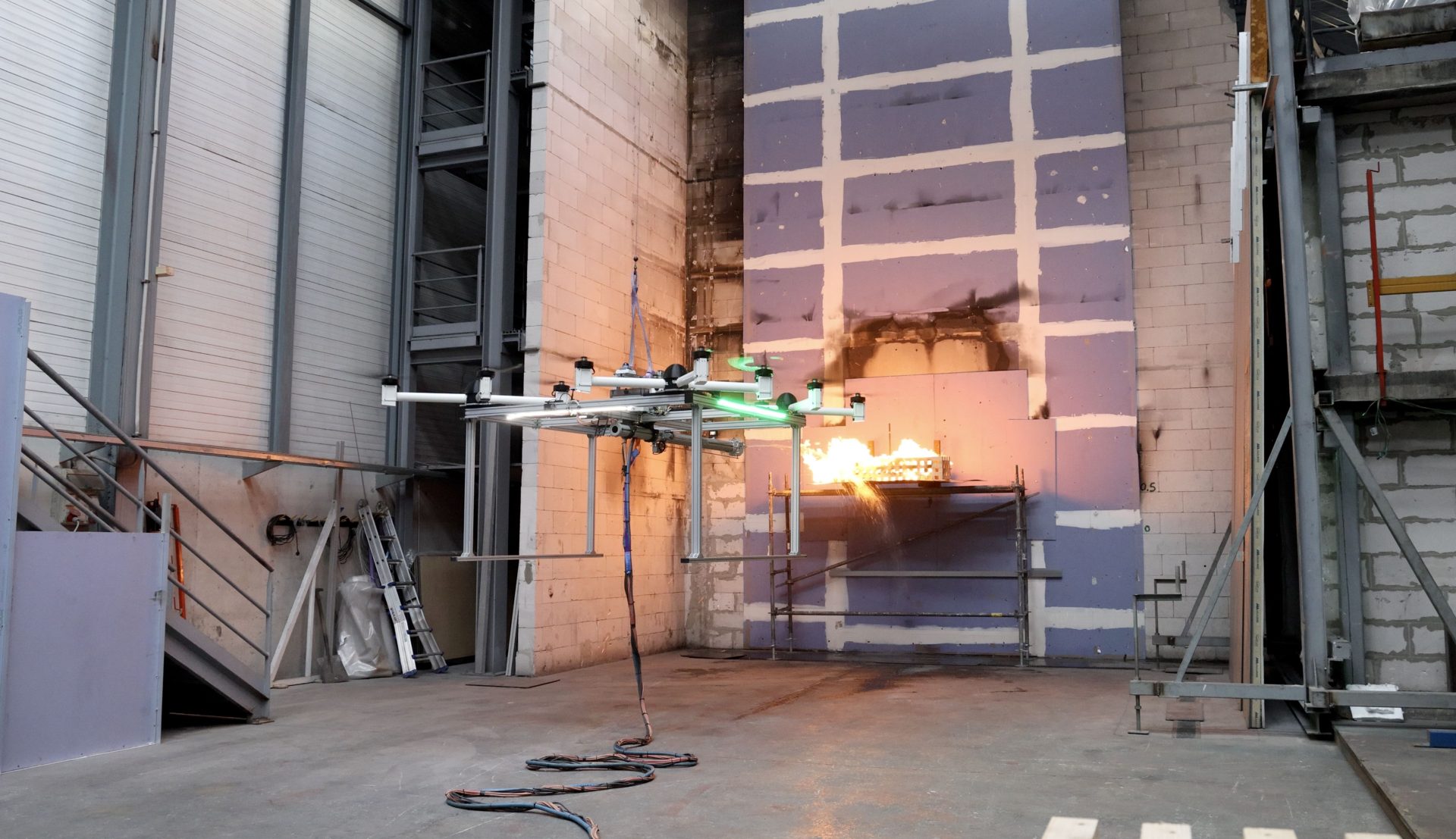
TECNALIA has designed and validated a high-capacity unmanned aircraft, developing its flight control system, support systems and a functional prototype that has been tested with real fire in its laboratory.
TECNALIA, the applied research and technological development centre, has designed a high-capacity electric drone for fighting forest fires, capable of carrying and discharging large volumes of water both horizontally and vertically. The project in which TECNALIA is participating, known as EXTINCIA (Advanced Rural Firefighting System Using UAVs – Unmanned Aerial Vehicles – and Artificial Intelligence), aims to improve the precision and effectiveness of fire suppression by deploying unmanned vehicles capable of vertical and horizontal payload drops of up to 600 kg. These aircraft are particularly useful for tackling small outbreaks located near inhabited areas or critical infrastructure.
TECNALIA’s role within the project has focused on the design of a high-capacity unmanned aircraft capable of both horizontal and vertical discharge operations for firefighting; the development of aircraft flight-control systems for fire suppression, including disturbance-rejection techniques and airworthiness assistance technologies (LIDAR); the development of a scaled aircraft prototype integrating a firefighting cannon and associated systems; and the execution of validation flights and firefighting tests using real fire in its laboratory facilities.
The initiative, in which TECNALIA is a participant, is funded by CDTI and led by CLUE Technologies, which develops artificial intelligence-based technologies to combat wildfires in rural and peri-urban areas. The consortium also includes Aeromedia, Bastan, Drone Hopper, Helion and Telespazio, with technological support from CATEC and ITG.
Innovation pillars
The innovation behind this aerial firefighting platform is built on three key pillars: the use of high-payload electric drones specifically designed for wildfire suppression; the advanced integration of artificial intelligence and onboard computing for precise, real-time operations; and the development of systems that enable the safe coexistence of manned and unmanned aircraft, a critical challenge that has not yet been fully resolved in firefighting operations. Together, these advances are aimed at improving operational effectiveness, enhancing real-time decision-making and protecting both the natural environment and the personnel involved in firefighting activities.
This initiative delivers a significant technological advance over current drones by incorporating a firebreak creation and wildfire suppression system based on unmanned aerial vehicles. Combined with artificial intelligence and advanced air-traffic control systems, these drones can respond rapidly and accurately to emerging fire outbreaks, reducing the risk of fire spread and improving operational safety.
The EXTINCIA project also promotes the safe integration of manned and unmanned aircraft through an advanced air-traffic management system. In addition, it incorporates communication and personnel-monitoring systems for ground crews, enhancing the safety of firefighting brigades by reducing their exposure to high-risk areas and providing real-time data to support decision-making.