The mobility and logistics sector advances in the definition of its Climate Agenda
The mobility and logistics sector in the Basque Country has begun the development of a Climate Agenda aligned with climate neutrality and business realities.
Operational efficiency and digitalisation are consolidating as key levers to accelerate decarbonisation and the sector’s transformation.
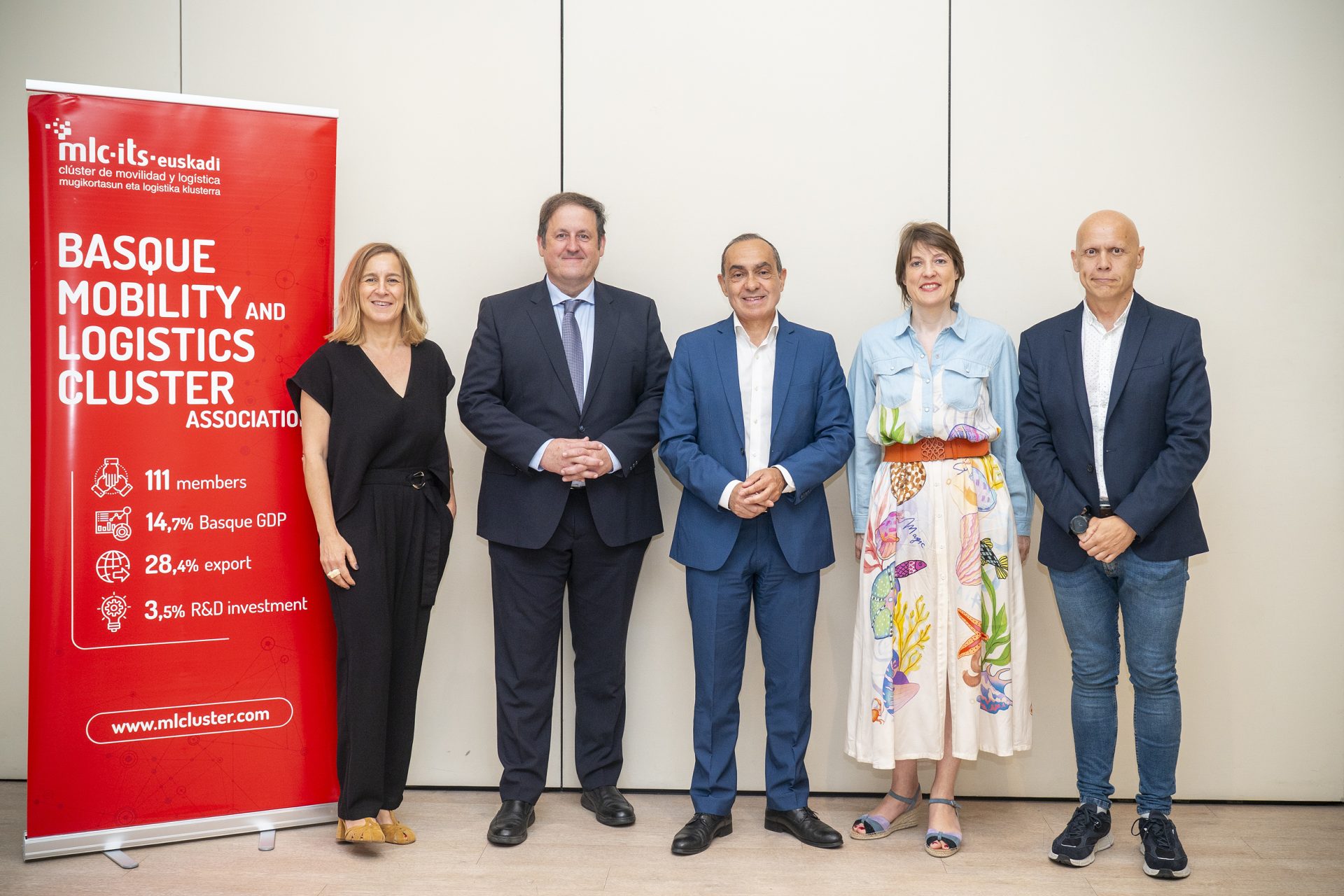
The Basque Country Mobility and Logistics Cluster, in collaboration with Silvan&Miracle, is working on the definition of a sectoral Climate Agenda aligned with climate neutrality objectives, regulatory frameworks and the realities faced by companies. With this purpose, it has brought together the sector’s key stakeholders to share perspectives, validate priorities and advance its design. The session was supported and attended by the Deputy Minister for Infrastructure and Mobility of the Basque Government, Miguel Ángel Páez, who highlighted the sector’s current transitional moment and the importance of strengthening public–private collaboration to address decarbonisation challeng
The meeting brought together members, companies, institutions and organisations to identify the sector’s main challenges and gather contributions that will serve as the basis for building a roadmap aligned with the realities and needs of the Basque business ecosystem. The session opened with a series of interventions that provided deeper insight into European trends in sustainable mobility, the BasquESG initiative, and the support and financing instruments available to accompany the climate transition.
Main challenges for sustainability and decarbonisation
Subsequently, the working groups identified the principal sustainability challenges facing the sector: the renewal of fleets towards low-emission vehicles; the deployment of charging and refuelling infrastructure for electric vehicles and alternative fuels; and the improvement of operational efficiency through the optimisation of routes and energy consumption. In addition, the importance of promoting digitalisation was highlighted in order to enable more efficient management and facilitate the measurement of carbon footprint and other ESG (environmental, social and governance) indicators.
Operational efficiency and digitalisation as the starting point for the transition
Participating organisations agreed that the sector’s Climate Agenda should be built on improvements in operational efficiency. In this regard, digitalisation is a key element, as it enables route optimisation, the reduction of empty mileage, improved planning and fuel savings. On this basis, companies will be better positioned to assess the adoption of new technologies, such as fleet electrification, which entails significant changes to their operating models.
In addition, it was noted that the organisations most advanced in sustainability are typically those whose clients demand more sustainable solutions. This market demand was identified as one of the main levers to accelerate the sector’s transformation.
Improving access to support schemes and strengthening support for companies
Another aspect highlighted during the session was access to support instruments. Participants pointed out that, despite the wide range of grants and financing programmes available, many companies are either unaware of them or encounter difficulties in identifying those that best fit their needs. In this sense, the role of the Cluster as a supporting agent was emphasised, particularly for small and medium-sized enterprises, helping them to identify the most suitable funding lines to foster their innovation, sustainability, energy efficiency and decarbonisation projects. Furthermore, the need to simplify administrative procedures—which currently may discourage their use—was underlined.
Next steps
The contributions gathered during this first working session will serve as the basis for the preparation of the first draft of the Climate Agenda for the mobility and logistics sector. This tool will aim to guide and support the sector in its transition towards a more sustainable, competitive and resilient model.
About the Cluster
The Basque Country Mobility and Logistics Cluster is an association that brings together the main stakeholders in the passenger and freight mobility sector. Its mission is to lead and drive the transition towards integrated, sustainable and connected mobility and logistics, strengthening business competitiveness and contributing to social well-being and the sustainable economic development of the Basque Country. Through collaboration, innovation and cooperation, it promotes safer, more efficient, cleaner and technologically advanced mobility. It currently comprises 130 members, representing 14.8% of the Basque Country’s GDP.