European climate policies are insufficient to mitigate the health risks of air pollution, according to a new BC3 study
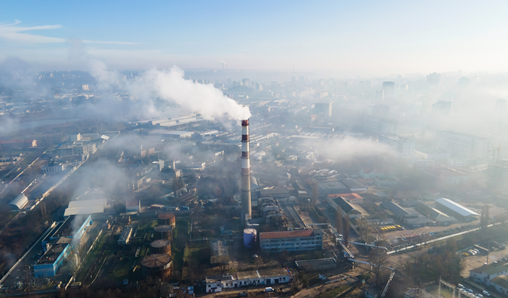
The study, published in the prestigious journal The Lancet Regional Health, introduces a novel approach to examining the impact of pollution on the continent’s population.
Low-income households and urban areas, particularly in the Balkan countries, face a higher risk.
Despite efforts to mitigate climate change and the implementation of stringent European decarbonisation plans, air pollution remains a threat to public health in Europe. In 2022 alone, exposure to fine particulate matter (PM2.5) caused more than 239,000 premature deaths across Europe and, according to projections for 2030, this pollutant will continue to be responsible for over 153,000 deaths annually on the continent.
However, this impact is not distributed evenly: households with lower incomes and urban areas, particularly in the Balkan countries, are disproportionately exposed to this pollution.
This is the main finding of a new study published in the prestigious journal The Lancet Regional Health and led by the climate research centre Basque Centre for Climate Change (BC3). The research presents a novel approach to analysing how pollution affects different groups according to their income level, age and type of settlement (urban or rural).
“When designing large-scale policies, traditional studies have tended to treat society as a uniform block, failing to reflect real inequalities. Moreover, they operate at very broad scales and rarely examine scenarios based on real and detailed climate policies. Our work results in a much more comprehensive picture, revealing which groups bear the health costs of Europe’s energy transition, both at international and local levels,” explains Clàudia Rodés-Bachs, BC3 researcher and author of the study.
European policies
The BC3 study, conducted in collaboration with the National Technical University of Athens (NTUA) and the European Commission’s Joint Research Centre (JRC), provides a detailed modelling of the “POLICY55” scenario, which integrates the National Energy and Climate Plans (NECPs) and the “Fit-for-55” (FF55) package. These European policies aim to reduce greenhouse gas emissions by 55% by 2030 compared with 1990 levels.
“Overall, Europe’s energy transition appears to be progressing smoothly, but aggregated figures conceal the fact that there are both winners and losers. Climate and air quality policies designed around averages are insufficient and risk leaving the most vulnerable behind,” Rodés-Bachs highlights.
For this reason, the study concludes that assessing health impacts at such a detailed level and combining this analysis with social factors is not merely a methodological advancement, but an essential requirement to ensure that climate policies are at once effective, fair and grounded in scientific evidence.
“Our work acts like a thermal imaging camera in a large apartment building: while the owner sees a balanced energy bill, the camera reveals which flats are experiencing thermal discomfort and which residents, within each flat, are silently bearing the cost of the building’s overall rules,” the researcher concludes.
The research, available at this link, has been funded by the European Union through Horizon Europe and the Marie Skłodowska-Curie Actions programme.